
What a Turnkey Interior Contract Should Include: a Clause-by-Clause Checklist for Gurugram Homes and Offices
Before you sign a turnkey interior contract, check these clauses: the scope and drawings, the material list, the price basis, a payment schedule tied to work done, the timeline, changes, the warranty and what happens at handover.
3 November 2026

A turnkey interior contract should say, in writing, exactly what will be built, with which materials, for what price, paid in which stages, finished by when, and what happens if anything changes or goes wrong. If a clause is not on paper, assume it is not part of the deal.
Turnkey means one company takes the job from design to handover: carpentry, false ceiling, electrical, painting, flooring, furniture and the coordination between them. That is the point of it. You deal with one team and one contract instead of six contractors. It also means that one document now carries the whole project, so it is worth reading slowly.
This checklist goes through the clauses one by one, in the order they usually appear. It applies to homes and offices alike. It is general guidance, not legal advice; for a large or unusual project, have a lawyer read the contract before you sign.
1. The parties and the site
The contract should name both sides correctly: you (or your company) and the contractor’s registered business name, with its GST number. It should give the full site address, the flat or unit number, and the carpet area being worked on.
Small as it sounds, this matters. A contract signed with a person’s name and no business details is hard to enforce later, and a GST invoice in the contractor’s business name is what makes the payments traceable.
2. The scope of work
This is the most important clause, and the one most often left vague. “Complete interiors for a 3 BHK” is not a scope. A proper scope lists each room and what will be done in it:
- carpentry items by room (wardrobes, kitchen, TV unit, beds, study, shoe rack, storage);
- civil work, if any (breaking or building walls, plumbing changes, waterproofing);
- false ceiling and lighting;
- electrical work (new points, wiring changes, distribution board);
- flooring, wall finishes, wallpaper and painting;
- loose furniture, curtains, lights and decor, if included;
- cleaning and debris removal at the end.
Just as useful is an exclusions list: the things that are not included. Air conditioners, appliances, chimneys and hobs, sanitary fittings, mattresses, and society or building charges are common exclusions. If they are not written down as included, plan to pay for them separately.
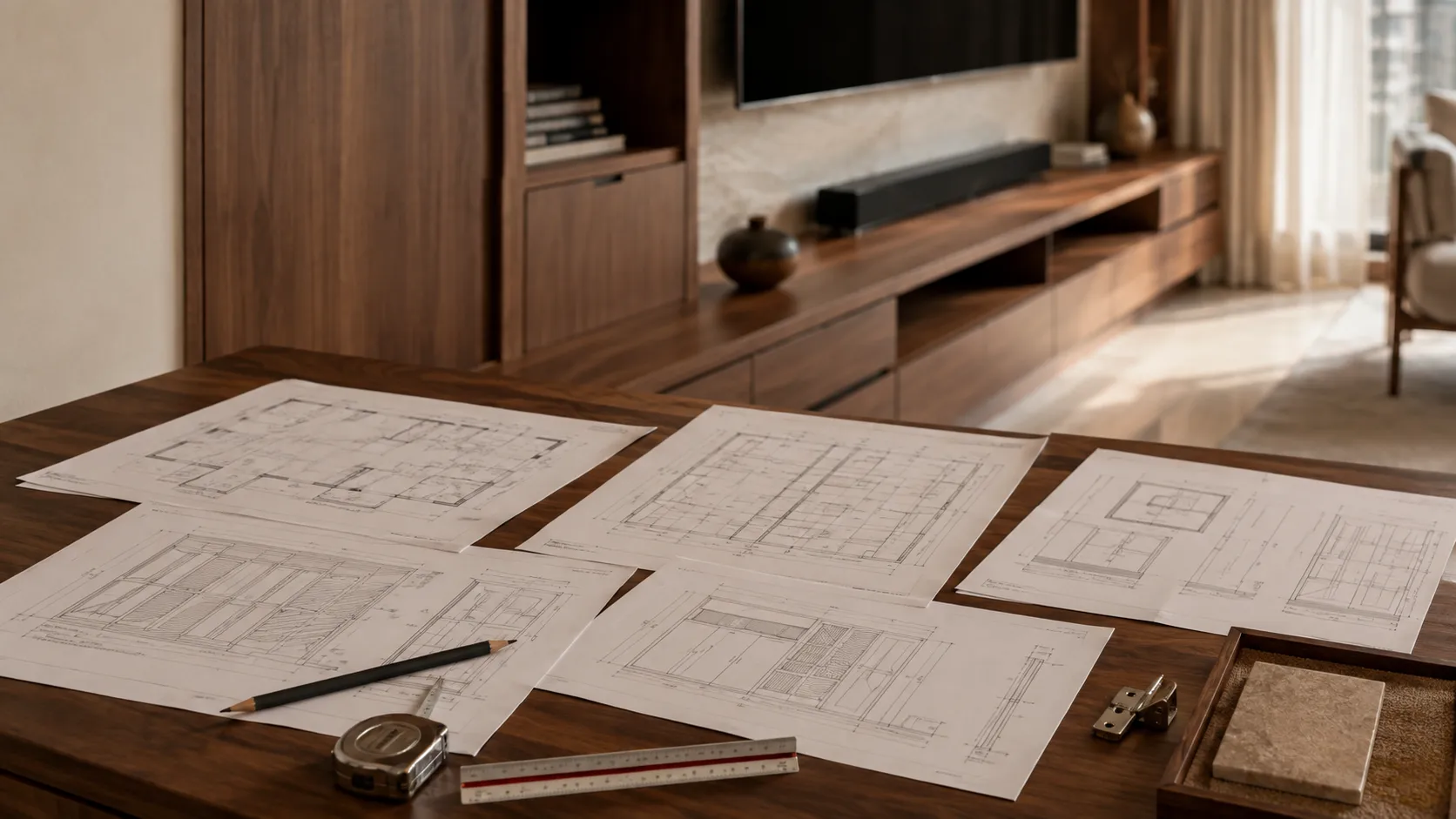
3. The drawings, attached to the contract
The approved drawings should be signed and attached to the contract as an annexure, not kept in a WhatsApp chat. At a minimum:
- the furniture layout for each room;
- elevations of every carpentry item, with sizes and the inside layout (shelves, drawers, hanging space);
- the false ceiling and lighting layout;
- the electrical layout showing every switch and socket;
- 3D views, if they were part of the design.
When a wardrobe turns up with one shelf fewer than you expected, the signed elevation is what settles it.
4. The material list: brands, grades and finishes
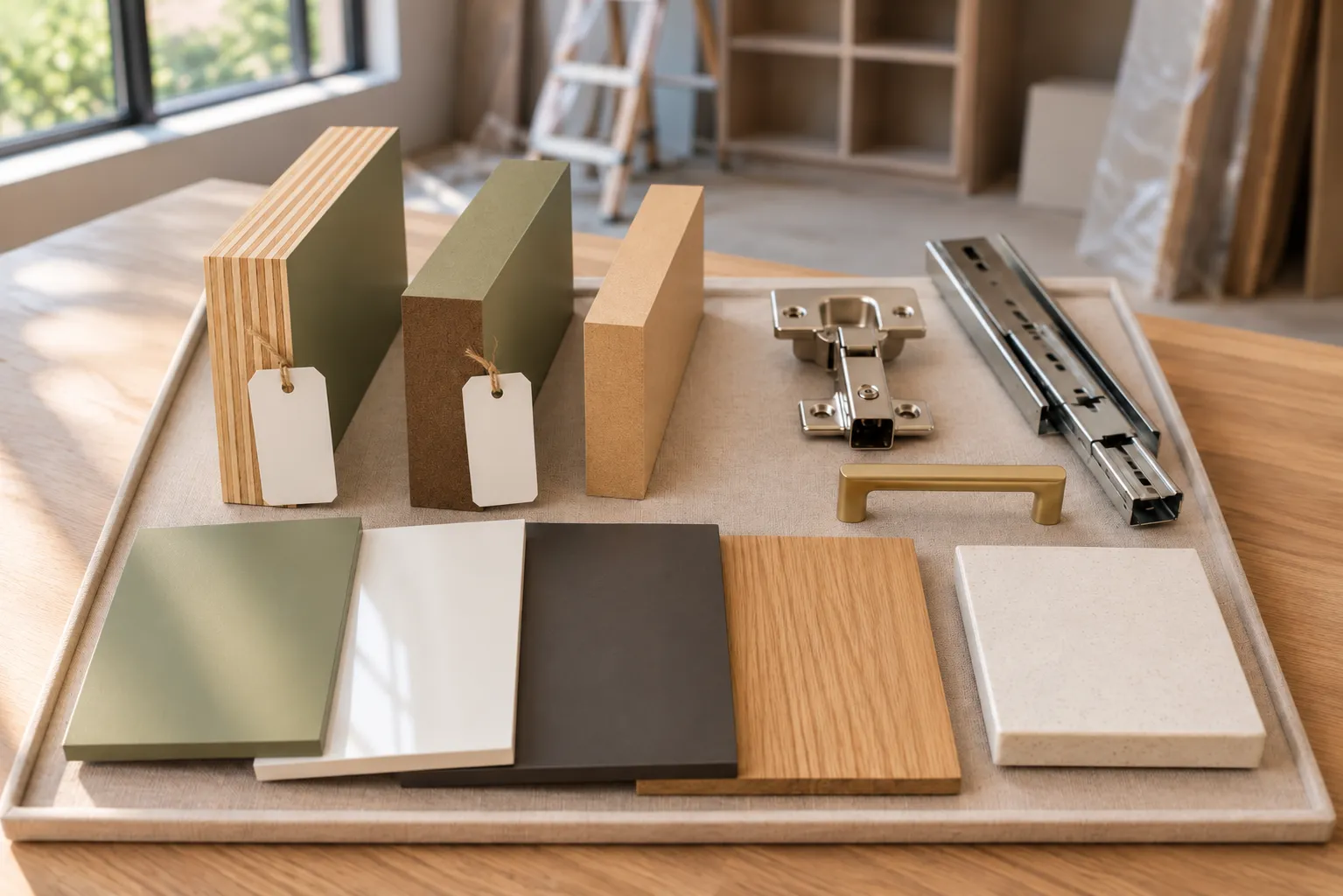
Two quotes for “a modular kitchen” can differ by lakhs because of what is inside them. The contract should name, for each item:
- the board: plywood (BWR or BWP grade), HDHMR or MDF, with brand and thickness (we compare them in HDHMR vs BWP plywood);
- the finish: laminate, acrylic, PU paint or veneer, with brand and shade code (see laminate vs acrylic vs PU vs veneer);
- the hardware: hinges, channels, lift-ups and handles, with brand and type (soft-close or not);
- the countertop: granite, quartz or other, with thickness and edge profile;
- paint brand and product, ceiling board brand, wire brand, switch range and light fittings.
“Equivalent brand” is acceptable only if the contract says who approves the equivalent. Otherwise “equivalent” tends to mean “cheaper”.
5. The price and how it is calculated
The contract should say how the price is worked out, because it decides what happens when sizes change:
- Lump sum (fixed price): one price for the agreed scope. Simple, but every change needs a written price.
- Item rates with a bill of quantities (BOQ): each item has a quantity and a rate, for example a wardrobe at a rate per sq ft of shutter area. The final bill is measured on site. Fair when the design may still shift, but you need the rates in writing.
Either way, the BOQ should be attached and should match the drawings and the material list. Check whether the quoted price includes GST (commonly 18 percent on interior works contracts), transport, installation, and debris removal. Our guide on how to read a modular kitchen quotation shows the same checks at a smaller scale, and our interior design cost guide gives typical rates to compare against.
6. The payment schedule
Payments should follow work that you can see, not dates on a calendar. A common pattern for a turnkey home or office project looks like this:
| Stage | Typical share | What should be done before you pay |
|---|---|---|
| Contract signed / design approved | 10 – 20% | Drawings and material list signed |
| Materials ordered, production starts | 25 – 35% | Board and hardware orders placed, site work begins |
| Site work at the halfway mark | 20 – 25% | Civil, electrical and false ceiling done; carpentry in progress |
| Installation complete | 15 – 25% | All furniture installed, painting done |
| After the snag list is closed | 5 – 10% | Every item on the snag list fixed and signed off |
The exact shares vary by project and contractor. What matters is the shape: a modest advance, payments that track progress, and a final share held back until the snags are fixed. Be careful with any contract that asks for most of the money before production starts. Pay by bank transfer against a proper invoice, and keep the receipts.
7. The timeline, and what happens if it slips
The contract should give a start date, a finish date and, ideally, the main stages in between. It should also list what can fairly extend the deadline:
- changes you ask for after the design is signed;
- late approvals or late payments from your side;
- building or society rules: many Gurugram condominiums and office buildings restrict noisy work to certain hours or days, and some stop work on Sundays and holidays;
- delays no one could control, such as Delhi NCR’s winter pollution curbs (GRAP), which can pause dusty site work like demolition and civil work for days at a time.
Then it should say what happens if the contractor is late for any other reason. Some contracts include a small agreed deduction per week of delay. Even without one, a written date gives you something to point to.
8. Changes and extra work (variations)
Almost every project changes along the way. A good contract says that no change is made without a written change note that states the new work, its price and its effect on the finish date, signed by both sides before the work is done.
This one clause prevents most end-of-project arguments, where a “small change” agreed on site turns into an unexpected line on the final bill.
9. Site rules, approvals and access
For an apartment or an office floor, the contract should say who handles:
- the society or building’s fit-out approval and any refundable deposit;
- lift use, material movement and debris removal according to the building’s rules;
- electricity and water during the work, and who pays for them;
- storage of materials on site and their safety;
- labour passes or police verification, if the building asks for them.
These look like small details until a society stops work for a week because a form was not filed.
10. Quality checks and handover
The contract should describe how the finished work is checked and handed over:
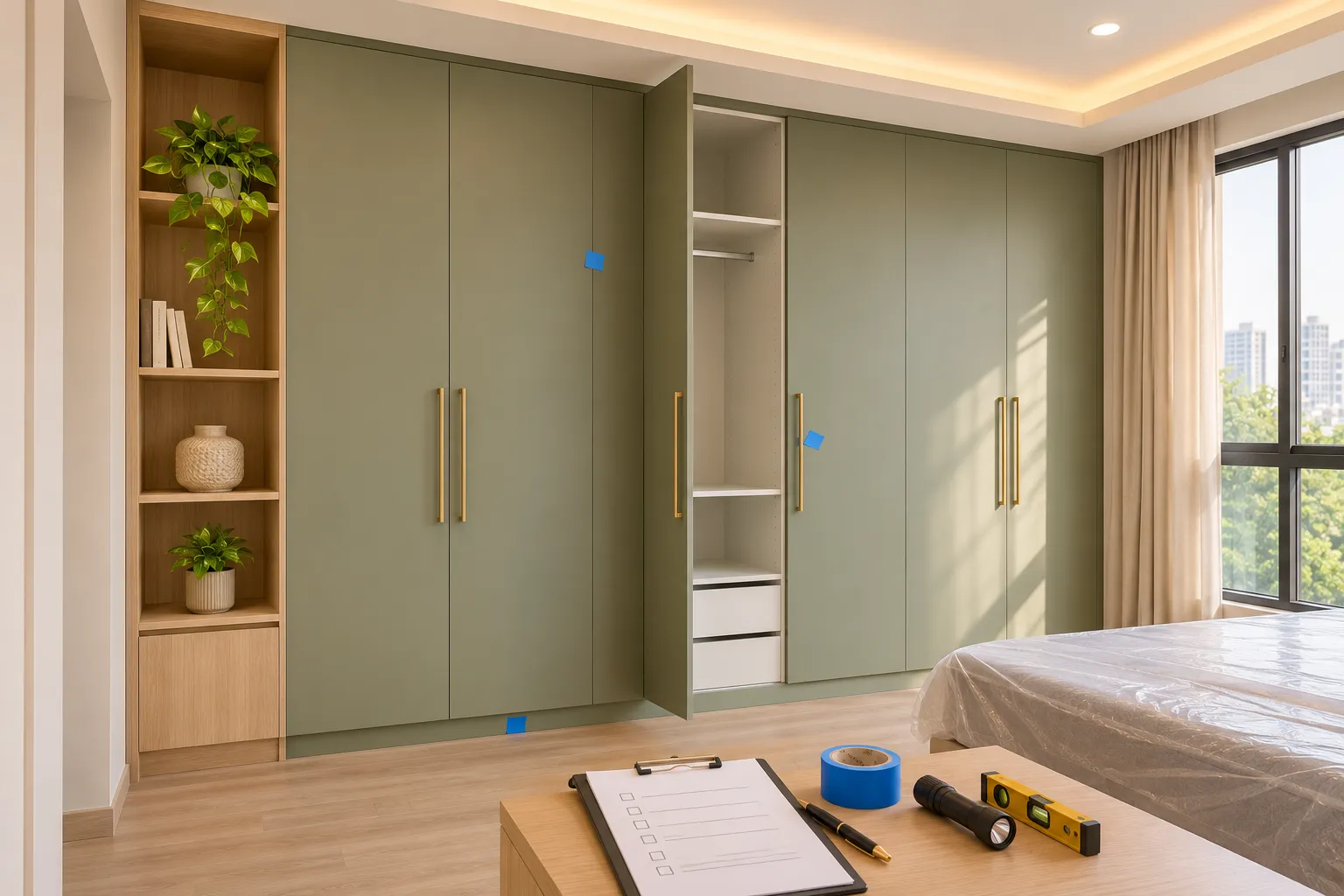
- a joint inspection at the end, room by room;
- a written snag list of everything that needs fixing, with a date to fix it;
- handover of keys, warranty cards, appliance manuals and any leftover tiles or paint for future repairs;
- final cleaning of the site.
Treat the snag list as part of the job, not a favour. That is why the last payment should wait for it.
11. Warranty and the defect period
Look for two separate things:
- The contractor’s own warranty on workmanship: a stated defect period, often one year from handover, during which faults in their work (a sagging shutter, a door that won’t close, cracking paint) are fixed at no cost.
- Manufacturer warranties on hardware, appliances, boards and fittings, which come from the brands. The contract should list them and say who handles a claim: you, or the contractor on your behalf.
The contract should also say what the warranty does not cover, such as damage from water leaks, misuse or changes made by someone else.
12. Cancellation and disputes
Nobody signs a contract expecting it to fail, which is exactly why this clause gets skipped. It should cover:
- How either side can end the contract, with notice, and how the work done and materials already bought are paid for at that point.
- Who owns what was paid for: furniture already made in a workshop for your home should be yours once paid for.
- How disputes are settled: first by meeting and talking, then through an agreed method such as mediation or arbitration, with the courts at Gurugram (or wherever the site is) named as the place for any case.
Red flags before you sign
- The scope says “complete interiors” with no room-by-room list.
- No drawings or material list attached, only a total amount.
- “Equivalent brand” with no say for you in what the equivalent is.
- A large advance, or most of the money due before production starts.
- No finish date, or a finish date with no stages.
- No mention of GST, so the final bill may be 18 percent higher than the quote.
- No written process for changes.
- Payments asked for in cash, or to a personal account instead of the business.
How we handle turnkey projects
We design, make and install interiors under one contract through our turnkey service, for homes, farmhouses and offices across Gurugram, Delhi and Noida. Wardrobes, kitchens and other furniture are made in our own workshop in Sector 44, Gurugram, so the material list in the contract is what actually goes into production, and you can see it being made.
If you are comparing turnkey contracts or quotes, book a site visit and bring the drawings and quotes you already have. We will walk you through what each one covers.
Frequently asked
Common questions
What should a turnkey interior contract include? +
At minimum: the exact scope, the approved drawings, a material list with brands and grades, a priced bill of quantities, a payment schedule tied to stages of work, a start date and finish date, a written process for changes, the warranty and defect period, the handover and snag list, and how disputes and cancellation are handled.
How much advance should I pay an interior contractor? +
A common pattern is 10 to 20 percent when the contract is signed or the design is approved, then further payments as materials are ordered and stages are finished on site, with the last 5 to 10 percent paid after the snag list is closed. Be careful with any contract that asks for most of the money before production starts.
Is GST charged on a turnkey interior contract? +
Yes. Interior fit-out of a home or office is usually billed as a works contract, and GST of 18 percent is commonly charged on it. The contract should say whether the quoted price includes or excludes GST, so two quotes can be compared fairly.
What warranty should a turnkey interior contract give? +
Look for a stated defect period for workmanship, often one year from handover, during which the contractor fixes faults at no cost. Hardware, appliances and some boards carry their own manufacturer warranties; the contract should list them and say who handles a claim.
What happens if the interior work is delayed? +
A good contract gives a finish date, lists what can fairly extend it (client changes, late approvals, late payments, building restrictions) and says what happens if the contractor is late for other reasons. Without this, a delay leaves you with nothing to point to.