
Retail Shop and Showroom Interior Cost per Sq Ft in Delhi NCR
What a shop or showroom fit-out costs in Delhi, Gurugram and Noida, from about ₹1,200 to ₹8,000+ per sq ft, how the type of store moves the number, and the items most retail quotes leave out.
15 October 2026
A complete retail shop or showroom interior in Delhi NCR costs, at typical 2026 market rates, about ₹1,200 to ₹8,000 or more per square foot of carpet area. Where a store lands in that range depends mostly on two things: how much of the floor is taken up by display joinery, and how demanding that joinery is (open shelving at one end, lockable glass cases with built-in lighting at the other).
That is why a clothing store and a jewellery showroom on the same Rajouri Garden street can be priced three or four times apart. This guide gives the ranges by material level, shows how the type of store moves them, breaks a budget down item by item, and lists what retail quotes most often leave out.
All figures are typical Delhi NCR market rates for supply and installation, before GST. They are a planning guide, not a quotation and not our rate card. A firm price needs a site visit, the lease plan and an agreed list of materials.
The overall range, by material level
For a complete shop interior (display joinery, counters, ceiling, flooring, wall finishes, lighting and electrical work, shopfront glazing, a trial room or back-of-house, design and site management), priced per sq ft of carpet area:
| Material level | Per sq ft | What it usually means |
|---|---|---|
| Essential | ₹1,200 – ₹2,000 | Vitrified tiles, gypsum or open painted ceiling, laminate wall units and a laminate cash counter, LED panels with some track lights, a plain glass shopfront |
| Premium | ₹2,000 – ₹3,500 | Stone, LVT or polished concrete floors, a feature ceiling, veneer, acrylic or metal display joinery, high colour-rendering track lighting on its own circuits, a branded shopfront |
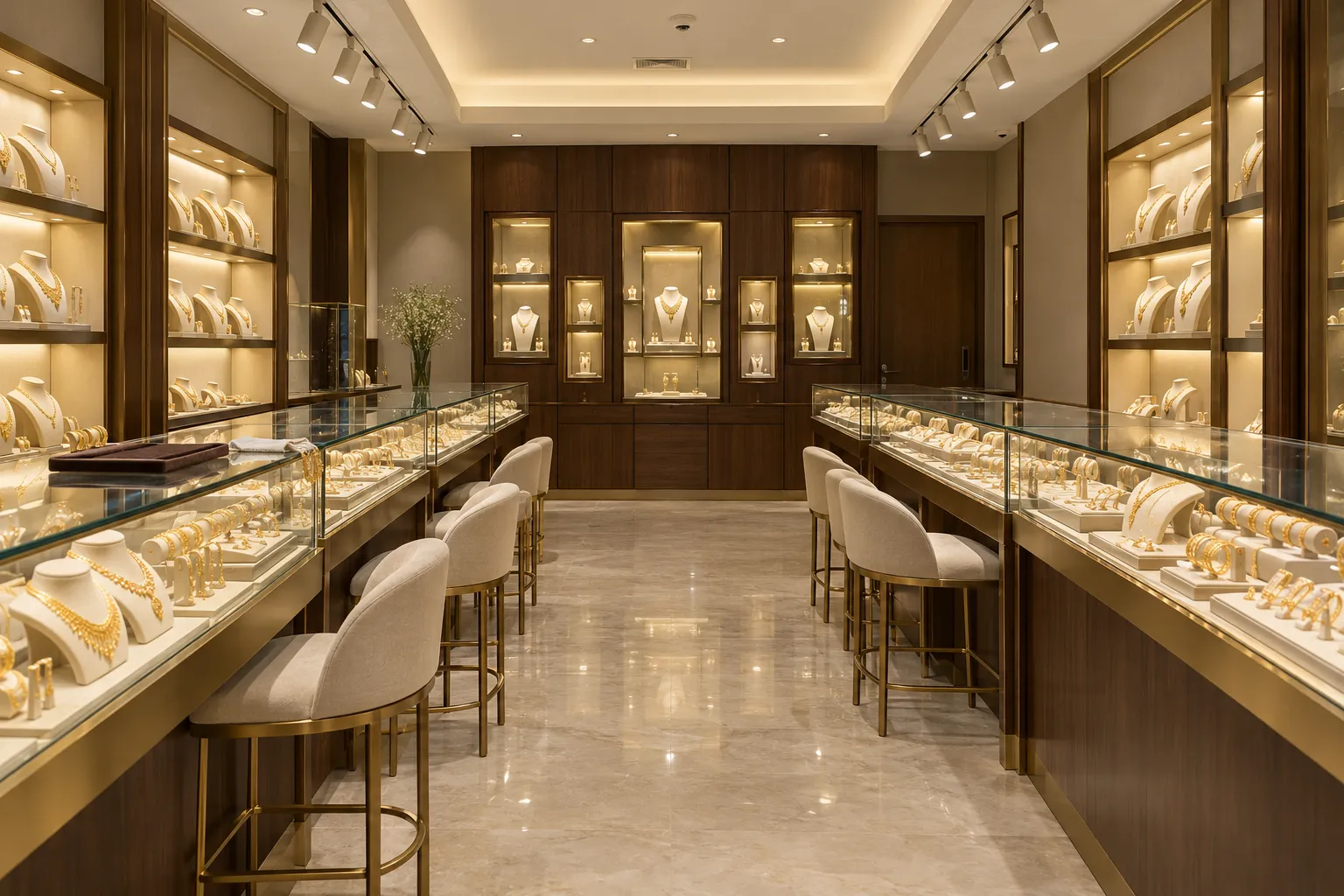
| Showroom | ₹3,500 – ₹8,000+ | Italian marble, lockable toughened-glass cases with integrated lighting, PU lacquer, veneer and brass detailing, layered display lighting, security detailing built into the joinery |
For comparison, a home interior in Delhi NCR runs about ₹1,200 to ₹5,000+ per sq ft (see our interior design cost per sq ft guide). Retail reaches higher at the top because a jewellery or watch showroom packs more specialist joinery and lighting into each square foot than any room in a house.
How the type of store moves the number
The material level sets the finish. The type of store decides how much of the floor carries expensive joinery.
| Store type | Per sq ft | What drives it |
|---|---|---|
| Mobile, electronics, pharmacy | ₹1,200 – ₹2,500 | Wall shelving, a long service counter, bright even lighting, heavy power and data |
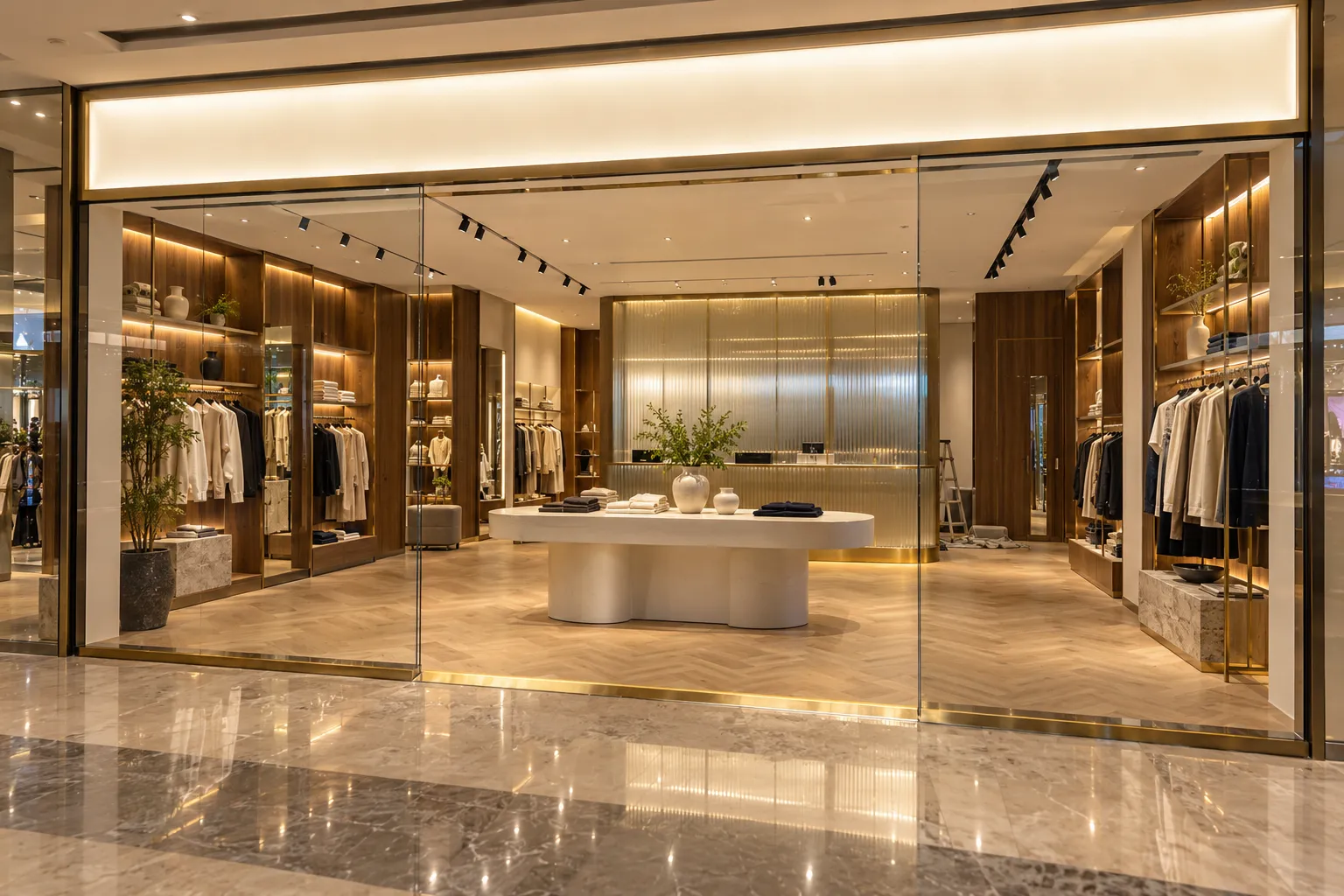
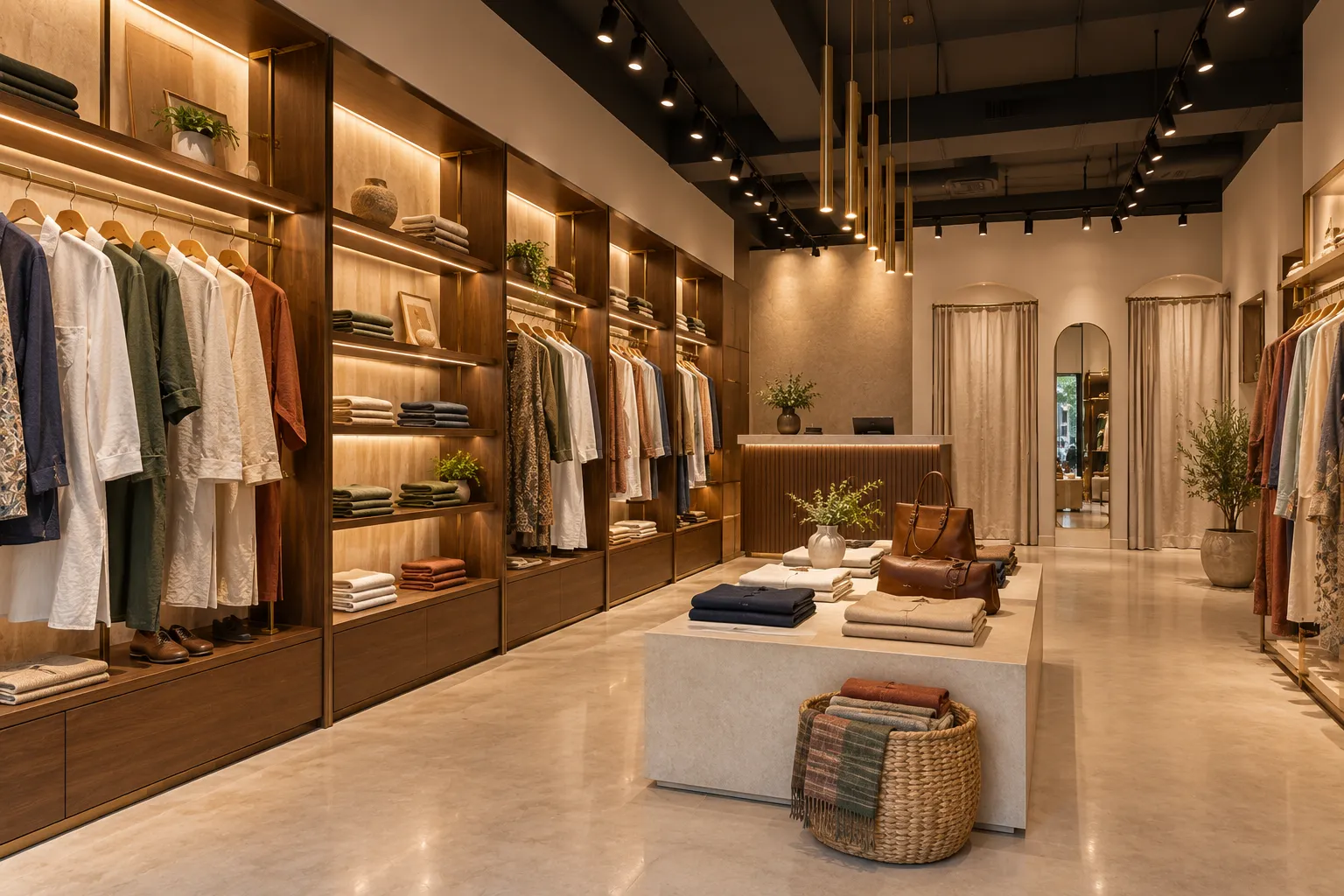
| Apparel, footwear, accessories | ₹1,500 – ₹3,500 | Wall bays and racks, trial rooms, mirrors, a feature shopfront |
| Eyewear, cosmetics, salons | ₹2,500 – ₹4,500 | Many small display niches with integrated lighting, mirror stations, plumbing for salons |
| Furniture, tiles, sanitaryware | ₹1,200 – ₹3,000 | Large open floor, vignettes built like room sets, a lot of wall and floor finish to show |
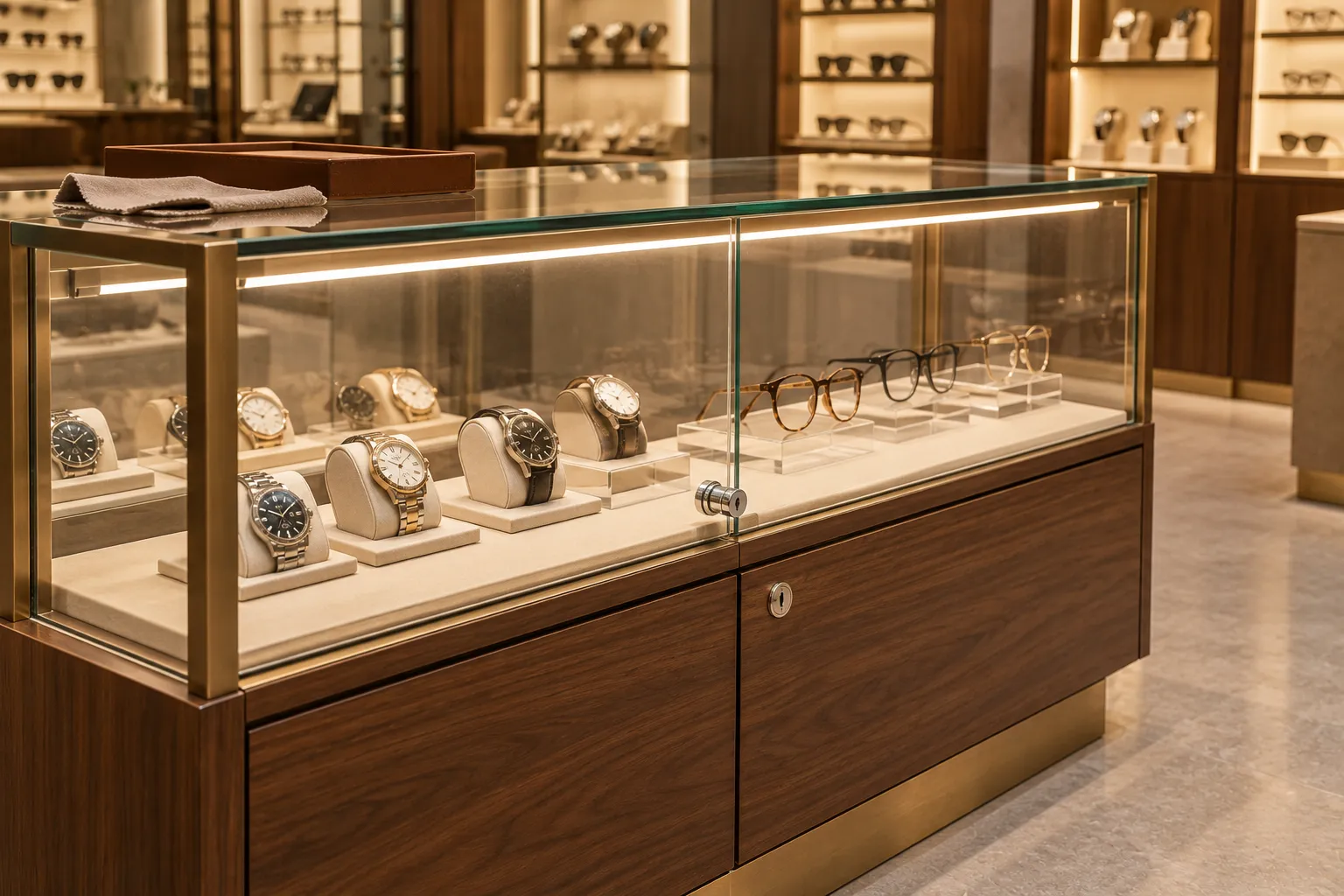
| Jewellery, watches, luxury | ₹4,500 – ₹8,000+ | Lockable glass cases on most of the floor, jewellery-grade lighting, stone floors, strongroom and security work |
A furniture or tile showroom often has the largest floor and the lowest rate, because much of the floor is open display space rather than built joinery. A jewellery showroom is the opposite.
Item by item: where a shop budget goes
Where an item is the same as in a home (flooring, ceilings), the ranges match our home cost guide. The rest are retail-specific.
Display joinery and counters
This is the line that moves a retail budget most.
- Wall display units, per running foot (about 8 feet high): laminate shelving ₹6,000 – ₹10,000; veneer, acrylic or metal-framed bays with lighting ₹10,000 – ₹20,000; lacquered or glass-fronted units with integrated lighting ₹20,000 – ₹35,000+.
- Lockable glass display counters (jewellery, watches, eyewear), per running foot: ₹30,000 – ₹80,000+, depending on the glass, the lighting, the locks and the finish.
- Cash and billing counter: ₹80,000 to ₹4 lakh+ as a single piece, more for a stone-topped counter with a display front.
- Trial rooms: ₹60,000 to ₹2 lakh each, with mirror, lighting, hooks and a seat.
Glass, lighting and locking have to work in the same piece of furniture. When each comes from a different supplier, this is usually where a showroom fit-out goes wrong.
Lighting
- General lighting (panels, downlights): ₹100 – ₹250 per sq ft of floor.
- Display lighting with high colour-rendering (CRI 90+) track spots and in-case strips: ₹250 – ₹800 per sq ft of floor, more in a jewellery showroom.
Display lighting should run on its own circuits, separate from general lighting, so the merchandise stays the brightest thing in the room. Inside a sealed case, heat from the fittings matters as much as brightness.
Flooring (per sq ft, installed)
- Vitrified tiles: ₹100 – ₹250
- LVT or vinyl planks (quiet underfoot, quick to replace): ₹150 – ₹350
- Epoxy or polished concrete: ₹100 – ₹450
- Indian marble: ₹250 – ₹600
- Imported Italian marble: ₹600 – ₹2,500+
Retail floors take far more footfall than a home, so pick for wear at the entrance and in front of the counters before picking for looks.
Ceilings (per sq ft)
- Open ceiling, services painted out: ₹60 – ₹150
- Plain gypsum: ₹90 – ₹150
- Gypsum with coves, or metal baffles and grids: ₹150 – ₹350
- Wooden or veneer feature ceiling: ₹250 – ₹500
An open ceiling is cheaper and gives more height, but every duct, cable tray and sprinkler line then has to be run neatly enough to be seen.
Shopfront and signage
- Toughened-glass shopfront with frameless doors: ₹800 – ₹1,800 per sq ft of glazing
- ACP, metal or stone cladding on the façade: ₹350 – ₹1,200 per sq ft
- Signage: about ₹50,000 to ₹5 lakh+, depending on size, illumination and the mall’s rules
Electrical, data and security
- Electrical wiring, DBs and data points: ₹150 – ₹350 per sq ft
- CCTV, access control and alarms: usually ₹1 lakh to ₹6 lakh+ as equipment, priced separately from the interior
- Strongroom or safe room for jewellery: priced by specification, and often the largest single item after the display cases
High street or mall: what changes
The same specification usually costs 10 to 25 percent more in a mall than on a high street. The difference is not the materials. It is the rules.
- The landlord’s fit-out manual sets the shopfront line, signage zone, approved materials, sprinkler and fire-alarm tie-ins, and the hours you may work. Drawings need the landlord’s approval before work starts.
- Fit-out deposits and charges: most malls take a refundable fit-out deposit and may charge for services tie-ins, debris removal and night power.
- Night work: in most malls, noisy work is allowed only after closing. Night and off-hours shifts usually add 15 to 30 percent to the labour part of the cost.
A high-street shop has fewer rules, but often needs more civil work: a new rolling shutter, façade repairs, waterproofing, a raised floor or a new electrical load from the discom.
Three worked budgets
These use the ranges above for the interior only, before air conditioning, fire systems, signage, security equipment, merchandise fixtures bought in by the brand, and GST.
| Store | Typical specification | Interior budget |
|---|---|---|
| 500 sq ft apparel or eyewear store | Premium | ₹10 lakh – ₹17.5 lakh |
| 1,200 sq ft jewellery showroom | Showroom | ₹54 lakh – ₹96 lakh+ |
| 3,000 sq ft furniture or tile showroom | Essential to premium | ₹36 lakh – ₹75 lakh |
The jewellery showroom costs about as much as the furniture showroom at less than half the floor area. Nearly all of the difference is display joinery and lighting.
Renovating a running shop
Many shops in Rajouri Garden, Karol Bagh, Lajpat Nagar and Gurugram’s Sector 14 and Galleria markets are being renovated rather than fitted out new. A renovation is usually cheaper than a new fit-out, because the shell, shutter and much of the electrical work can often stay. Two things push the cost back up:
- Working around trading hours. Night shifts carry a labour premium, and the store has to be sealed, cleaned and handed back before opening each morning.
- Old services. Wiring that cannot take new lighting loads, or an old AC system that does not fit the new ceiling, often has to be replaced before any finish goes in.
A survey of what can stay comes first. It is the difference between a renovation budget and a surprise halfway through.
What a retail quote often leaves out
Two shop quotes can look close and cover very different jobs. Check that each of these is listed as included or excluded:
- air conditioning (split, cassette or VRV), often ₹250 to ₹600 per sq ft for ducted systems;
- fire detection, sprinklers and their tie-in to the building’s system;
- signage, and its approvals;
- CCTV, alarms, access control and the strongroom;
- loose fixtures the brand supplies itself (mannequins, stands, digital screens);
- civil work: shutters, façade, raised floors and electrical load upgrades;
- mall fit-out deposit, landlord charges and night power;
- design fees, if charged separately from execution (see our guide to interior designer fees);
- GST, commonly 18% on an interior works contract.
How to keep a shop fit-out on budget
- Spend where the customer looks. The first three metres from the door, the main display wall and the counter earn their cost. The stockroom does not need to.
- Settle the display layout before anything else. It fixes the joinery, the lighting positions and the electrical points, so changing it later is expensive.
- Standardise the joinery. One module size repeated around the walls is cheaper to make and easier to restock than a different unit in every bay.
- Don’t cut display lighting. It is what makes merchandise look worth the price, and it is cheap compared with the joinery it lights.
- Get the landlord’s rules before the design is drawn, not after the joinery is made.
- Ask for an itemised quote that names the board, glass, finish, lighting fittings and locks for every display unit.
Getting a firm figure for your shop or showroom
We design, make and install retail and commercial interiors across Delhi, Gurugram and Noida. Display cases, counters and wall units are made in our own workshop in Sector 44, Gurugram, so the glass, lighting and locks are built into one piece and the site work runs in parallel. Our jewellery showroom in Rajouri Garden is a finished example, and our page on showroom interiors in Rajouri Garden covers how we work in a busy market.
Where a fit-out includes civil and services work, our turnkey service keeps it under one contract. To get a figure for your own store, book a site visit and bring the lease plan, the hours you can work and the date you need to open.
Frequently asked
Common questions
What is the interior cost per sq ft for a shop in Delhi? +
At typical market rates, a complete shop interior in Delhi NCR runs from about ₹1,200 to ₹2,000 per sq ft with essential materials, ₹2,000 to ₹3,500 for a premium brand-store finish and ₹3,500 to ₹8,000 or more for showrooms with lockable glass display cases, stone floors and specialist lighting, such as jewellery. Air conditioning, fire systems, signage, security equipment and GST are usually extra.
Why does a jewellery showroom cost more per sq ft than a clothing store? +
Because most of a jewellery showroom's floor is taken up by display joinery that does three jobs at once: lockable toughened-glass cases, integrated high colour-rendering lighting that must not heat the display, and counters built to take daily handling. That joinery costs several times a clothing store's wall racks, and the security work around it adds more.
Does a mall shop cost more to fit out than a high-street shop? +
Usually, by 10 to 25 percent for the same specification. Malls set approved materials, shopfront and signage rules, permitted working hours and a fit-out deposit, and the drawings need landlord approval before work starts. High-street shops have fewer rules but often need more civil, shutter and façade work.
How long does a shop fit-out take? +
Four to eight weeks for a small high-street or mall store once drawings are approved, and eight to fourteen weeks for a larger showroom with a lot of display joinery. Making the joinery in a workshop while the site work runs in parallel is what keeps it short.
Can a shop be renovated without closing? +
Often, yes. Noisy and dusty work is done at night or outside trading hours and the area is sealed and cleaned between shifts. Night and off-hours work usually adds 15 to 30 percent to the labour part of the cost, which should be in the quote from the start.
Keep reading