
Walk-In Wardrobe Cost in Gurugram: A 2026 Luxury Guide
A custom walk-in wardrobe in a Gurugram master bedroom costs between ₹3.5 lakhs and ₹9 lakhs in 2026, with the final price defined by material selection, finish, and the complexity of design.
9 July 2026
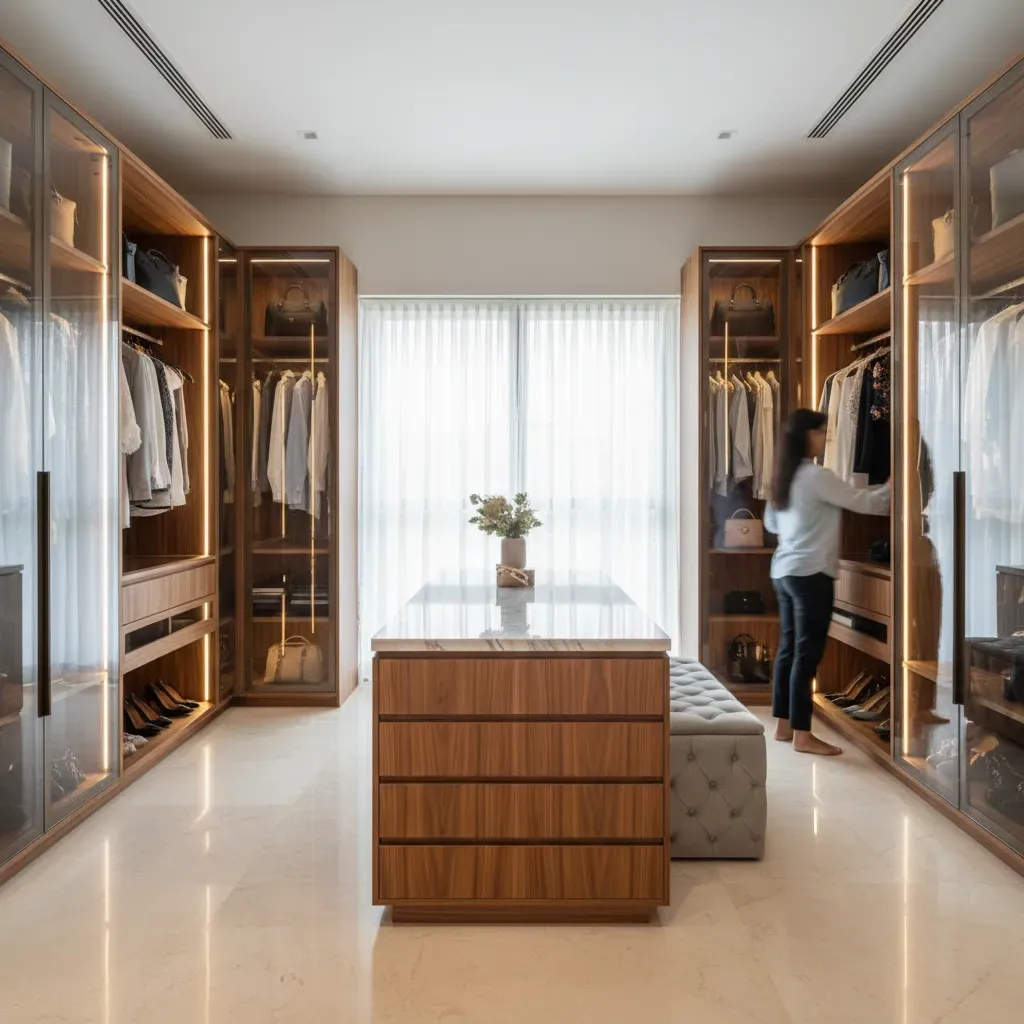
For a luxury master bedroom in Gurugram, the walk-in wardrobe cost in 2026 is a significant investment defined by material integrity and craft. As a cornerstone of bespoke bedroom design, its price reflects a commitment to durability, aesthetics, and personalised functionality, moving far beyond simple storage.
At Eagle Decor, we approach wardrobe design as integrated architecture for the bedroom. The final cost is not a singular figure but a composition of core material choices, finish specifications, and the precision of execution—factors that ensure the piece endures as beautifully as it functions.
Core Material Cost Breakdown: HDHMR vs. BWP Plywood
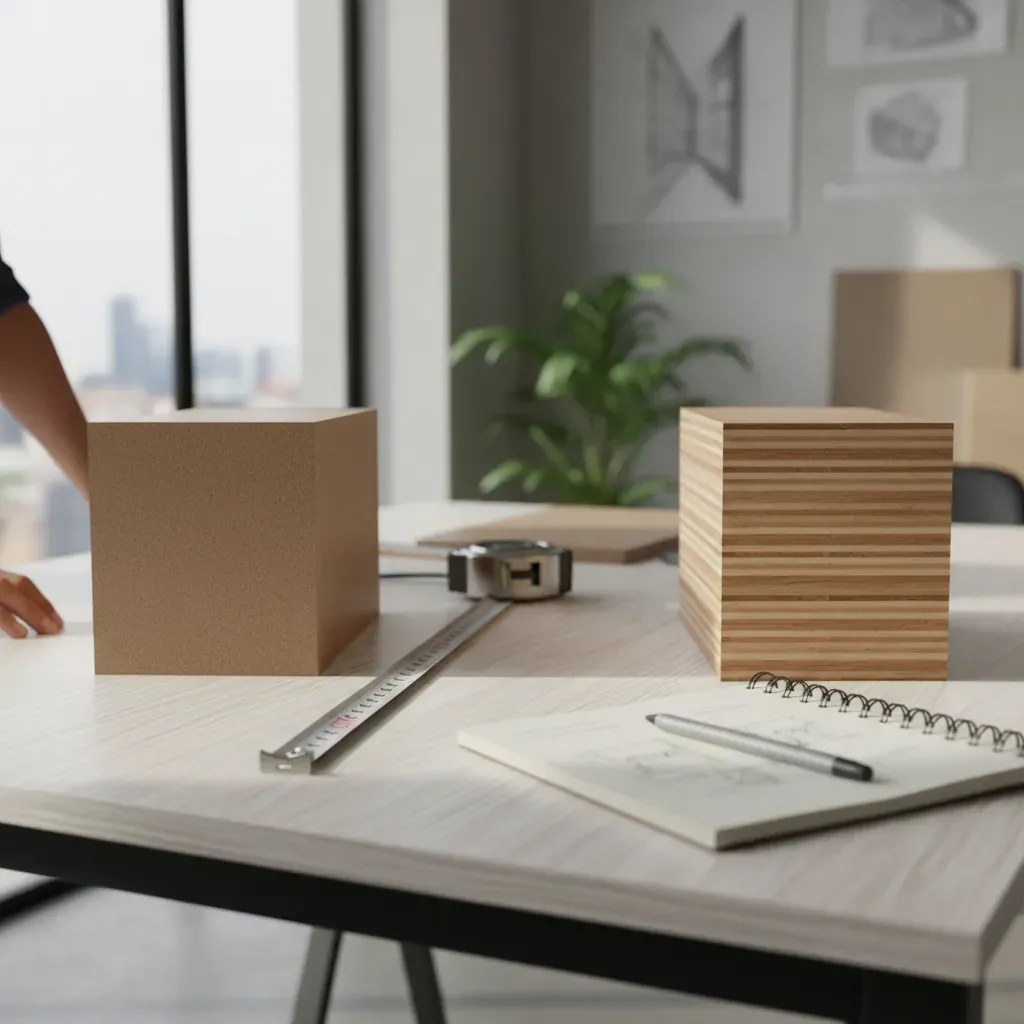
The structural substrate is the primary cost driver and dictates the wardrobe’s longevity. In Gurugram’s variable climate, selecting the right engineered wood is non-negotiable for luxury applications.
High-Density High Moisture Resistance (HDHMR) HDHMR represents the contemporary standard for premium, built-to-last cabinetry. It is an engineered board with superior dimensional stability and moisture resistance compared to traditional plywood.
- Cost Implication: HDHMR commands a premium, typically adding 15-25% to the material cost over premium BWP plywood.
- Best For: Clients seeking absolute durability, flawless painted finishes, and modern, handle-less designs where panel stability is critical. Its consistent density makes it ideal for intricate CNC machining and sophisticated joinery.
Boiling Water Proof (BWP) Plywood BWP plywood has been the longstanding benchmark for moisture-resistant furniture. Its cross-banded veneer construction offers good strength, though it can be susceptible to warping if not of the highest grade.
- Cost Implication: High-grade BWP plywood remains a robust and slightly more cost-effective option than HDHMR.
- Best For: Traditional wardrobe constructions, applications where a natural wood veneer finish is desired, and projects with a defined budget that still require proven moisture resistance.
The choice between these materials directly influences not just the price but the design possibilities and long-term performance of your modular furniture solutions.
Finish & Aesthetics: Veneer vs. Laminate
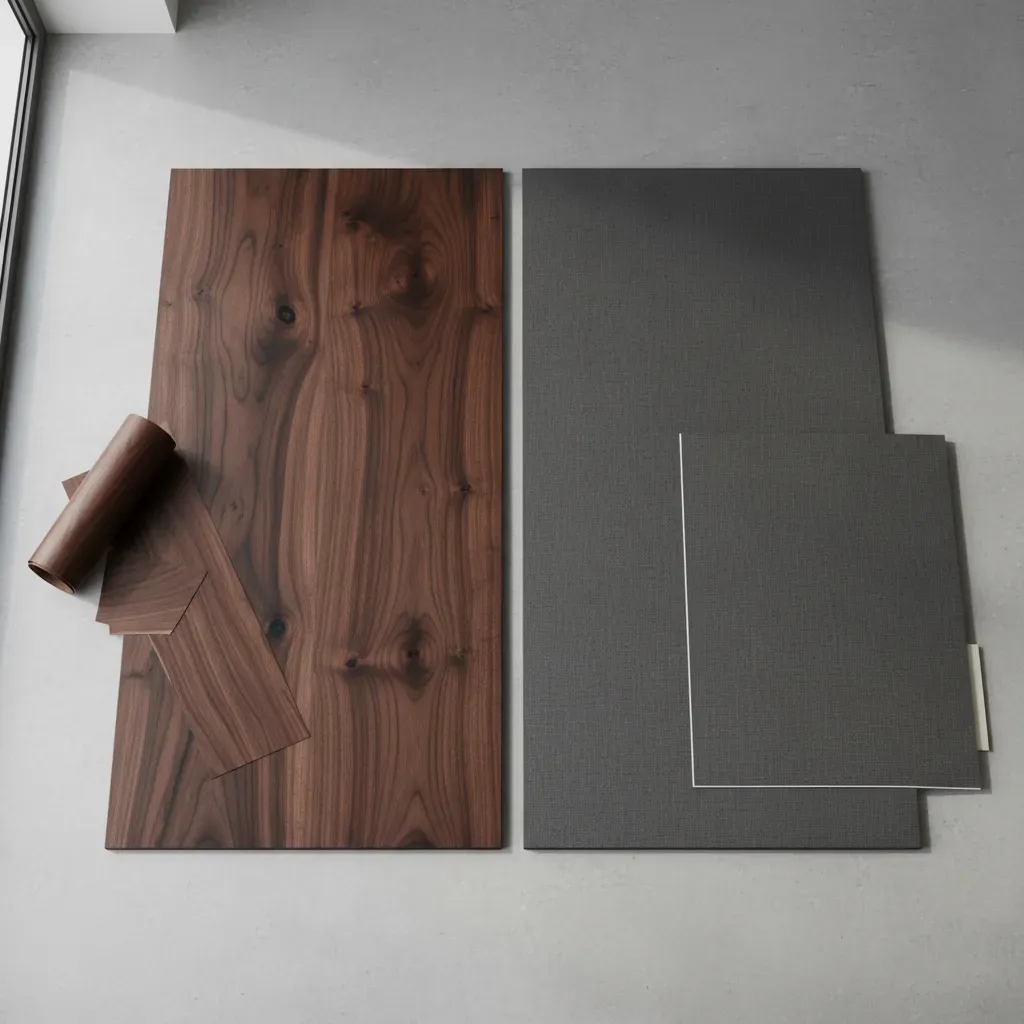
The surface finish transforms the structural shell into a statement of style, with a corresponding impact on the walk-in wardrobe cost.
Natural Wood Veneer Veneer involves thin slices of real hardwood bonded to the substrate. It offers authentic grain patterns, depth, and a tactile warmth that synthetic materials cannot replicate.
- Cost Implication: This is a high-luxury finish. Material and skilled application costs can double the price of the finished panels compared to laminates. Exotic wood veneers (e.g., walnut, oak, teak) increase this further.
- Aesthetic Value: Delivers unparalleled richness and uniqueness, making it a cornerstone of premium handmade furniture projects.
Premium Decorative Laminate Modern laminates offer immense versatility, with textures, patterns, and matte finishes that closely mimic natural materials at a lower cost point.
- Cost Implication: The most cost-effective finish for a high-end look. Large-format, textured laminates from brands like Sunmica or Century provide excellent durability and design consistency.
- Practical Value: Highly resistant to scratches, stains, and fading, making it a practical choice for high-use areas within the wardrobe.
Estimated Cost Ranges for a Gurugram Master Bedroom
These estimates are for a typical U-shaped or L-shaped walk-in wardrobe of approximately 60-80 square feet, inclusive of design, materials, fabrication, hardware, and professional installation. Custom carousels, specialised lighting, and automated systems are extras.
- Economy Luxury (Laminate Finish): ₹3.5 lakhs – ₹5 lakhs. Utilises premium BWP plywood with high-pressure laminate surfaces, standard internal fittings, and soft-close hardware.
- Standard Luxury (Mixed Finish): ₹5 lakhs – ₹7 lakhs. Often combines an HDHMR carcass with a mix of laminate exteriors and veneer accents on visible panels. Includes upgraded pull-outs, accessory trays, and LED lighting integration.
- Full Luxury (Veneer/Full Custom): ₹7 lakhs – ₹9+ lakhs. Built with HDHMR or the finest BWP plywood, finished in full natural wood veneer. Features completely customised interiors, branded hardware (Blum, Hettich), integrated ambient lighting, and considered details like leather-lined drawers.
These figures underscore why accurate planning is essential. A professional interior design service ensures the budget aligns with material reality and design ambition from the outset.
Factors Beyond Material That Influence Final Cost
While materials form the foundation, several other elements refine the final investment.
Design Complexity & Layout A simple rectangular layout is more economical than a design with angled corners, floor-to-ceiling glass fronts, or integrated seating. Each custom element requires additional engineering and labour.
Internal Configuration & Hardware The cost escalates with specialised inserts: tie racks, jewellery trays, velvet-lined drawers, shoe carousels, and pull-down hanging rods. The quality of drawer runners, hinge mechanisms, and pull-out systems also forms a significant part of the budget.
Professional Installation & Project Management Precise on-site installation by experienced craftsmen is crucial. This includes final finishing, hardware calibration, and integrating the wardrobe seamlessly with the room’s electrical and lighting plans—a core component of professional construction planning and support.
Investing in a custom walk-in wardrobe is ultimately about creating a personal haven that complements your daily routine. By understanding the cost drivers of materials and finishes, you can make informed decisions that balance luxury with longevity. For a detailed discussion tailored to your master bedroom’s dimensions and style, we invite you to begin a conversation.
Frequently asked
Common questions
What is the main cost difference between HDHMR and BWP plywood for a wardrobe? +
HDHMR typically costs 15-25% more than premium BWP plywood due to its superior moisture resistance, density, and dimensional stability, which allows for more precise, modern finishes and intricate designs.
Is a laminate finish considered low-quality for a luxury wardrobe? +
No. Modern premium laminates offer excellent durability, a wide range of sophisticated textures and colours, and are highly practical. They provide a luxury look at a more accessible price point than natural veneer.
What are the biggest hidden costs in a walk-in wardrobe project? +
Beyond materials, costs can increase significantly with custom internal fittings (specialised pull-outs, organisers), high-end hardware (Blum, Hettich), integrated LED lighting systems, and complex design elements that require additional engineering and installation time.
How long does it take to build and install a custom walk-in wardrobe? +
From final design approval, expect a timeline of 6 to 8 weeks. This includes material procurement, factory fabrication, finishing, and precise on-site installation, ensuring every detail meets specification.