
Practical Vastu Tips for Kitchen Direction in Delhi NCR Homes
Discover practical Vastu tips for kitchen direction to harmonize your space, even when the ideal South-East corner isn't an option in your apartment.
19 August 2026
Finding the right balance between ancient architectural principles and modern apartment constraints is a common challenge, but applying practical vastu tips for kitchen direction can harmonize your space without requiring structural overhauls. At Eagle Decor, we regularly help homeowners across Delhi NCR design custom kitchens that respect traditional guidelines while maximizing the layout of contemporary high-rises and villas. Whether you are renovating an older property or moving into a newly built builder floor, aligning your cooking space with Vastu Shastra can promote better energy flow, safety, and functionality.
The Ideal Vastu Direction for Kitchens
According to Vastu Shastra, the kitchen represents the fire element (Agni). Therefore, the most auspicious placement for a kitchen is the South-East corner of the home. Cooking in this direction, while facing East, is believed to bring prosperity and good health to the household.
If the South-East is entirely unavailable, the North-West corner serves as the second-best alternative. However, in the densely packed real estate landscape of Gurugram, Delhi, and Noida, homebuyers rarely have the luxury of dictating the exact structural placement of their kitchen block. Builders design layouts based on plumbing stacks, building footprints, and maximizing floor space, often leaving the kitchen in less-than-ideal zones like the North-East or South-West.
Practical Fixes for Non-Ideal Kitchen Layouts
When your structural kitchen direction cannot be changed, you can apply internal Vastu remedies to correct the energy imbalance.
Managing a North-East Kitchen
The North-East is considered the zone of water and spirituality, making it highly incompatible with the fire element of a kitchen. If your apartment features a North-East kitchen, the goal is to minimize the negative impact. Ensure that the actual gas stove or hob is placed in the South-East corner of the kitchen room itself. Keep the space immaculately clean and clutter-free. Introduce earthy colors and heavy stone countertops to ground the conflicting energies.
Adapting a South-West Kitchen
A kitchen in the South-West can sometimes lead to domestic friction according to Vastu principles. To counteract this, utilize the internal layout strategically. Place your heavy storage units, tall pantries, and refrigerators along the South or West walls. This anchors the space. Keep the North and East walls as light and open as possible, perhaps utilizing open shelving instead of dense upper cabinets.
Micro-Zoning: Aligning Internal Elements
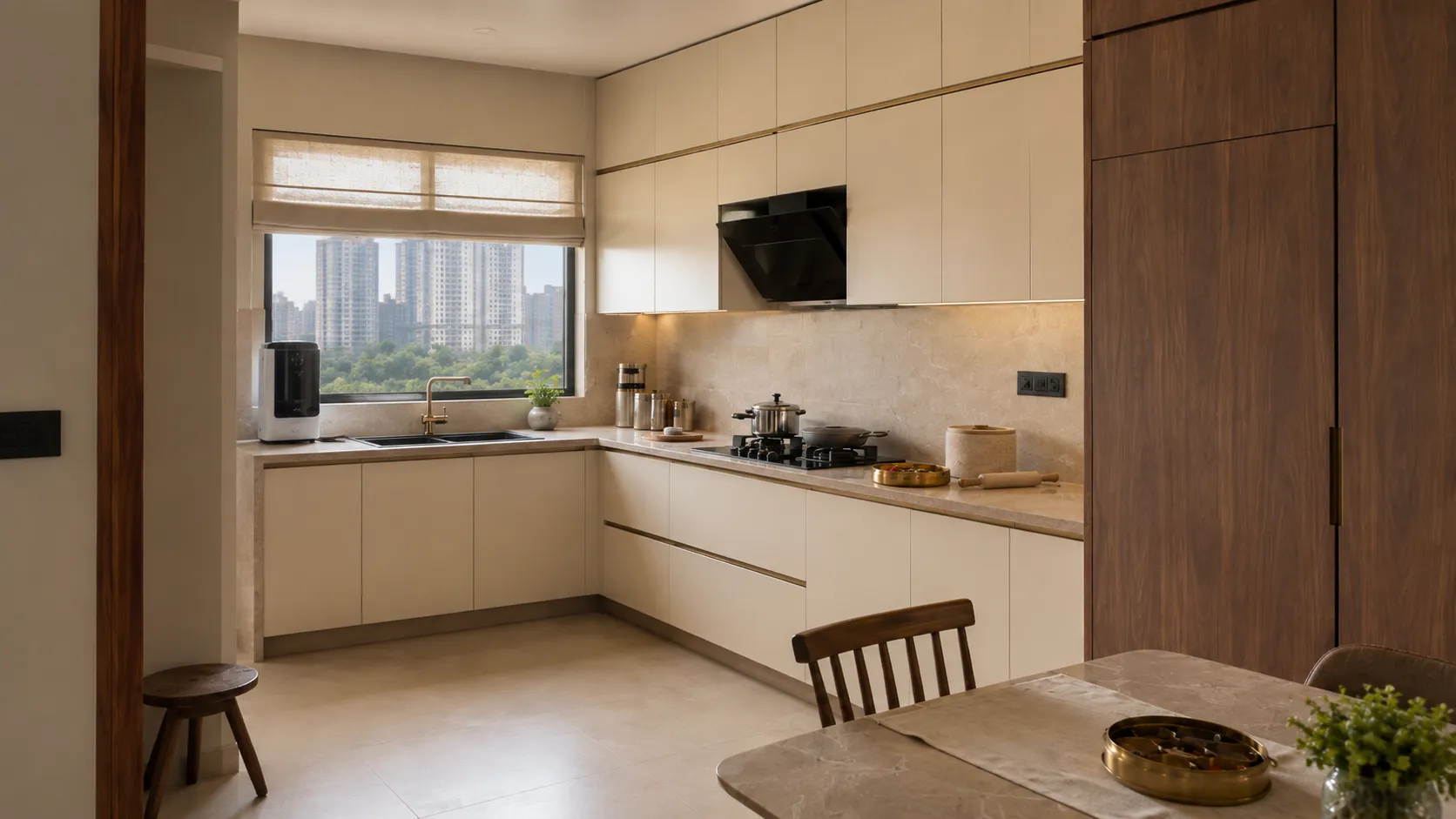
The most effective way to implement Vastu in a pre-built apartment is through micro-zoning. This involves carefully placing your appliances, sinks, and storage within the existing room.
Separating Fire and Water
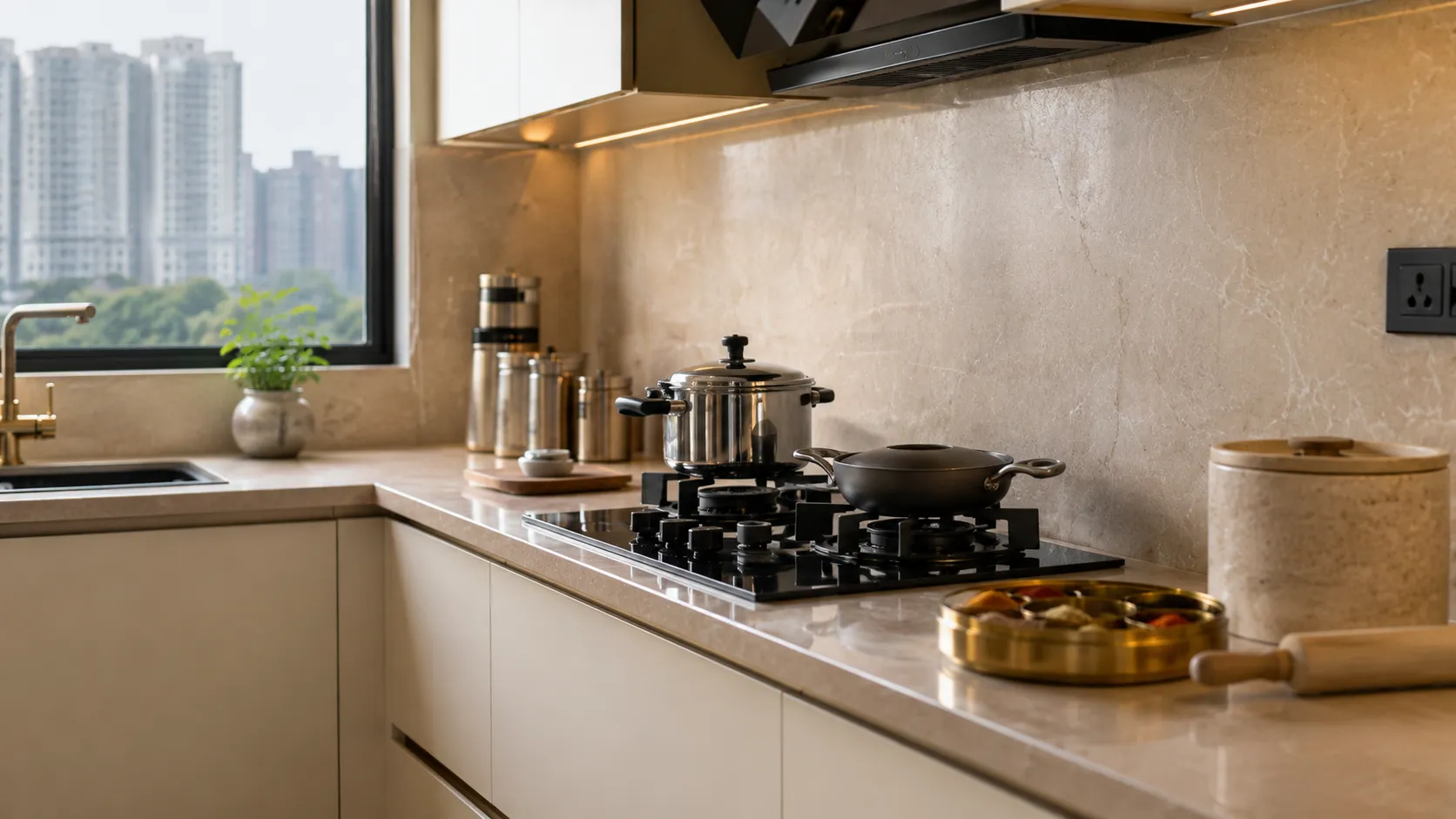
Fire (the stove) and water (the sink) should never sit side-by-side. If you have an L-shaped counter, place the hob on one arm of the ‘L’ and the sink on the other. For straight-line kitchens, ensure there is a substantial expanse of countertop between the two. A clear separation allows both elements to exist without clashing. Using distinct materials, like a black glass hob and a separate black composite sink bridged by a neutral stone counter, helps define these zones clearly while maintaining a sleek aesthetic.
Strategic Storage Placement
Vastu dictates that heavy items should be stored in the South or West directions. A tall, dark wood pantry unit or a built-in refrigerator block is perfectly suited for these walls. Lighter items, everyday utensils, and smaller appliances like water purifiers should be kept towards the North or East. Keeping your daily spices in traditional brass containers (masala boxes) and steel canisters organized on the eastern counter not only aligns with Vastu principles but also ensures a highly functional cooking experience.
Material and Colour Choices for Vastu Compliance
Colors play a vital role in balancing the energy of a room. For kitchens, Vastu recommends warm, earthy, and vibrant tones that complement the fire element.
Avoid overly dark or entirely black kitchens, as these can absorb light and create a heavy atmosphere. Instead, opt for a palette of beige, cream, light yellow, or soft peach. Matte cream handleless cabinets paired with a seamless beige stone countertop and backsplash create an inviting, Vastu-compliant environment. The natural veining in the stone adds an earth element that grounds the space.
Metallic accents, such as brass faucets, brass spice containers, and metallic cabinet profiles, introduce a subtle fire element that enhances the room’s energy without overwhelming the visual design.
Maximizing Light and Ventilation
A core tenet of Vastu is the unimpeded flow of natural light and air. The kitchen must be well-ventilated to clear out smoke, odors, and stagnant energy. Large windows, especially those facing East or North, are highly beneficial.
If your apartment kitchen features a window overlooking the city skyline, keep it unobstructed. Use light-filtering window treatments like linen Roman blinds that provide privacy without blocking the daylight. Supplement natural light with layered artificial lighting, including under-cabinet LED strips that illuminate the workspace and eliminate dark, shadowy corners.
Tailoring Your Kitchen with Eagle Decor
Designing a kitchen that is both beautiful and Vastu-compliant requires thoughtful planning and precise execution. At Eagle Decor, we specialize in adapting traditional layout rules to fit modern aesthetics. Whether you require minor modular adjustments to your apartment or are planning a complete overhaul through our complete turnkey solutions for interior and exterior spaces, our team ensures every corner is optimized.
For clients building standalone homes or villas where the layout can be determined from the ground up, our comprehensive construction services allow you to integrate Vastu principles right from the architectural blueprint stage. By focusing on intelligent zoning, harmonious color palettes, and premium materials, we create kitchens that are not just cooking spaces, but the true heart of your home.
Frequently asked
Common questions
What is the best direction to face while cooking according to Vastu? +
According to Vastu Shastra, facing East while cooking is considered the most auspicious, as it is believed to bring good health and positive energy into the home.
Can I place the sink and the stove next to each other? +
No, Vastu advises against placing the sink (water element) and the stove (fire element) directly next to each other. If they are on the same counter, ensure there is a clear physical distance or a partition between them.
What colors are best for a Vastu-compliant kitchen? +
Earthy and warm tones like beige, cream, light yellow, and soft orange are ideal. It is generally recommended to avoid entirely black or very dark kitchens, as they can create a heavy energy.
Where should heavy appliances be placed in the kitchen? +
Heavy appliances, tall pantry units, and refrigerators should ideally be placed along the South or West walls of the kitchen to anchor the space properly.