
The Evolution of Interior Design: A Complete History Timeline
Interior design has never been about decoration alone — it is a record of how people lived, what they could build, and what they wanted to be seen owning. This timeline traces that story from ancient Egypt to the quiet luxury of the 2020s, including the Indian thread that most Western histories leave out.
8 August 2026
Interior design is often described as decoration. It isn’t. Every era’s interiors are a record of three things: what people believed, what their technology allowed them to build, and what they wanted visitors to notice. Change any one of those and the rooms change with it.
This is the timeline, era by era — and because most histories of interior design skip it entirely, the Indian tradition is set alongside the Western one rather than tacked on at the end.
Ancient interiors: 3000 BCE – 500 CE
The earliest designed interiors were about permanence and power.
Egypt used what was scarce: gold leaf, ebony, alabaster, and wall paintings that were religious instruction as much as ornament. Furniture was low, built from precious woods, and often made for the afterlife rather than daily use.
Greece shifted the emphasis to proportion. The orders of columns — Doric, Ionic, Corinthian — were a system of ratios, and that idea, that beauty is measurable, is arguably the single most durable concept in the history of design.
Rome industrialised it. Concrete let Romans build large interior volumes, so the interior itself became the event: mosaic floors, frescoed walls, courtyards, underfloor heating in wealthy homes.
The Indian parallel is older than most of this. The Indus Valley cities of Mohenjo-daro and Harappa, around 2600 BCE, had standardised fired brick, private bathing rooms and covered drainage. That is planned domestic infrastructure, and it predates the Roman villa by two thousand years.
Medieval: 500 – 1400
In Europe, interiors contracted. Stone halls were dark, cold and defensive; tapestries existed to stop draughts before they existed to look impressive. Furniture was sparse and portable, because households moved.
In India the same centuries produced the opposite: elaborate rock-cut and temple interiors, and the beginnings of the courtyard house — a plan driven by climate rather than defence. The courtyard pulled light and air into the centre of a deep plan, a solution still being reinvented today.
Renaissance: 1400 – 1600
The Renaissance made the interior a designed object. Linear perspective gave designers a way to compose a room as a picture. Symmetry, classical proportion and the deliberate placement of art became the standard, and for the first time the wealthy commissioned interiors as a coherent scheme rather than accumulating furnishings.
Baroque and Rococo: 1600 – 1750
Baroque was persuasion through scale — gilding, marble, ceiling frescoes, deliberate theatre. Versailles is the argument in built form.
Rococo turned the volume down and the intimacy up: lighter palettes, curved lines, smaller rooms designed for conversation. It is the first moment where comfort competes seriously with grandeur.
Overlapping this, Mughal architecture in India was doing something technically remarkable — pietra dura marble inlay, jaali screens that controlled light and privacy without blocking air, and water used as an architectural element. The jaali in particular is a genuinely sophisticated piece of environmental design, and it has returned to contemporary Indian interiors almost unchanged.
Neoclassical: 1750 – 1850
The excavations at Pompeii and Herculaneum triggered a correction. Out went Rococo’s curves; back came straight lines, restrained ornament and classical motifs. Robert Adam in Britain treated the interior as a total scheme — walls, ceiling, carpet and furniture designed together. That idea, the unified scheme, is the direct ancestor of what an interior designer does now.
Victorian: 1837 – 1901
The Industrial Revolution changed interiors more than any style did. Machine production made patterned wallpaper, textiles and carved furniture affordable to a middle class that had never been able to buy them. The result was density: heavy drapery, dark woods, layered pattern, every surface occupied.
It is easy to mock, but the Victorian interior is the first mass-market interior in history. Ordinary households could finally participate in decoration at all.
Arts and Crafts: 1880 – 1920
The backlash arrived quickly. William Morris and the Arts and Crafts movement argued that machine production had severed the link between the maker and the object, and that the work was worse for it. The movement pushed honest materials, visible craftsmanship and a rejection of ornament that pretended to be something it wasn’t.
This is the moment worth paying attention to, because the same argument is being had right now — see custom millwork versus ready-made furniture, which is the identical debate with different vocabulary.
Art Nouveau and Art Deco: 1890 – 1940
Art Nouveau took its lines from nature — whiplash curves, botanical forms, stained glass, wrought iron.
Art Deco went the other way: geometry, symmetry, lacquer, chrome, exotic veneers. It was the aesthetic of speed and machinery, and it travelled globally. Mumbai holds one of the world’s largest concentrations of Art Deco buildings, which is why the style reads as genuinely Indian to many people rather than imported.
Modernism and the Bauhaus: 1919 – 1960
The Bauhaus collapsed the distinction between art, craft and industry. Form follows function; ornament is treated as dishonest; steel, glass and plywood are used openly as themselves. Le Corbusier’s “machine for living in” is the hard edge of this thinking.
Modernism’s influence on India was direct and enormous. Le Corbusier’s Chandigarh and the wave of post-independence civic building reshaped how Indian urban housing was planned — open plans, concrete frames, large glazing.
Mid-century Modern: 1945 – 1970
Post-war optimism, new materials — moulded plywood, fibreglass, foam — and a genuine attempt to make good design affordable. Tapered legs, low profiles, warm woods, functional shapes. It has never fully gone out of fashion, which is unusual for any style.
Postmodernism: 1970 – 1990
A deliberate rejection of modernist seriousness. Colour, historical quotation, irony, ornament reinstated as a choice rather than a failing. Short-lived as a dominant style, but it permanently reopened the door to decoration.
Contemporary: 1990 – today
The last three decades have moved in a clear arc:
- 1990s–2000s: minimalism, open plan, the beige and taupe palette.
- 2010s: industrial and mid-century revival, exposed brick, statement lighting, Instagram-driven glossy maximalism.
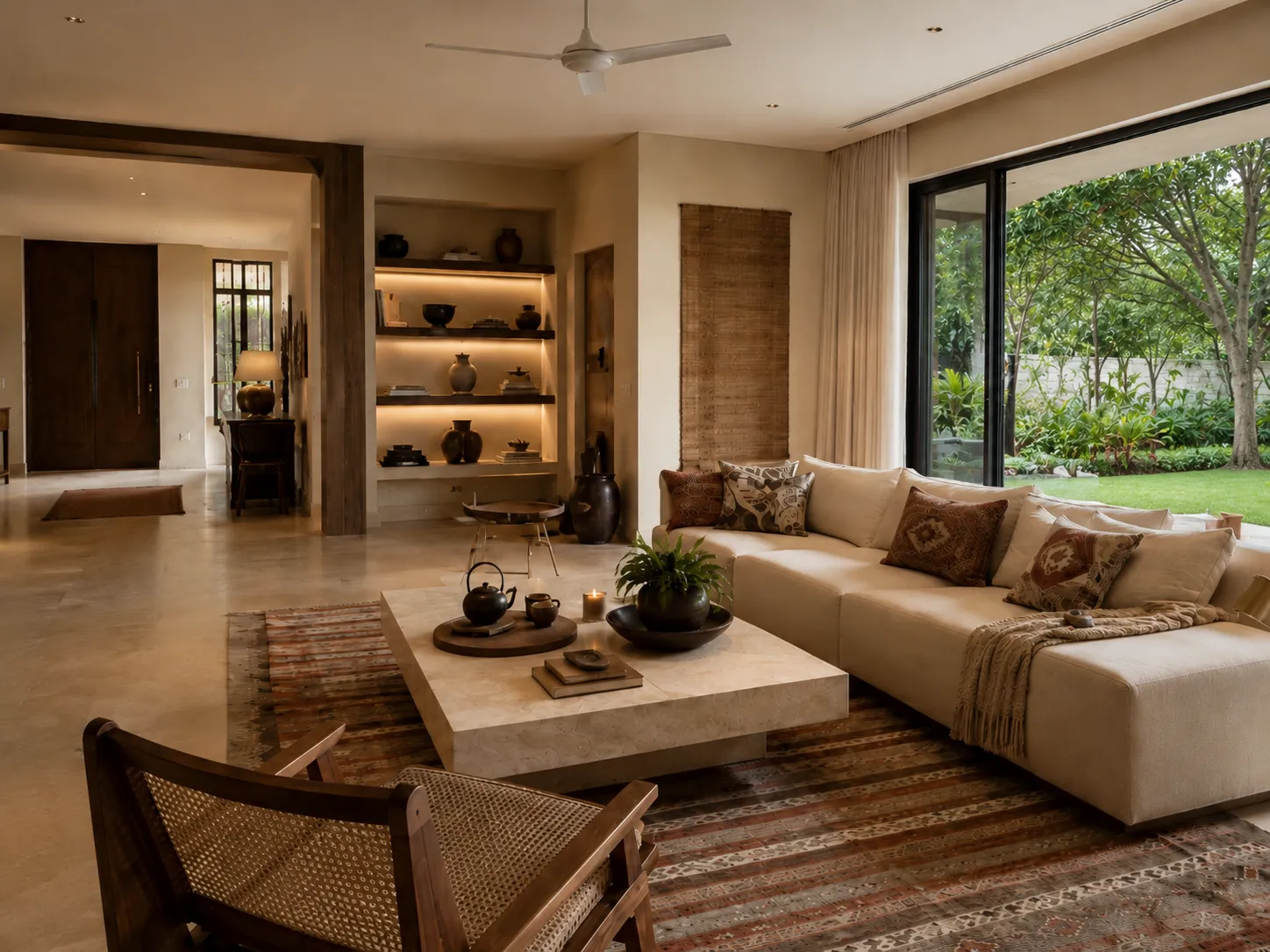
- 2020s: a turn towards warmth, texture, natural materials and fewer, better pieces.
That last shift is the one currently underway. It has a name — quiet luxury — and it is genuinely a reaction to two decades of interiors designed to photograph well rather than to live in. We’ve written about how it’s playing out in this region in quiet luxury in Delhi NCR homes and in 2026 interior design trends.
The pattern worth noticing
Read the timeline in one pass and a rhythm appears. Ornament accumulates until it becomes excessive, a movement strips it back to honesty and function, austerity becomes cold, and warmth returns. Baroque to Neoclassical. Victorian to Arts and Crafts. Art Deco to Bauhaus. And now, all-white minimalism to quiet luxury.
The other constant is technology. Roman concrete, Victorian mechanised looms, Bauhaus tubular steel, today’s engineered surfaces and CNC joinery — each one changed what was affordable, and what is affordable is what eventually becomes a style.
Where this leaves an Indian home in 2026
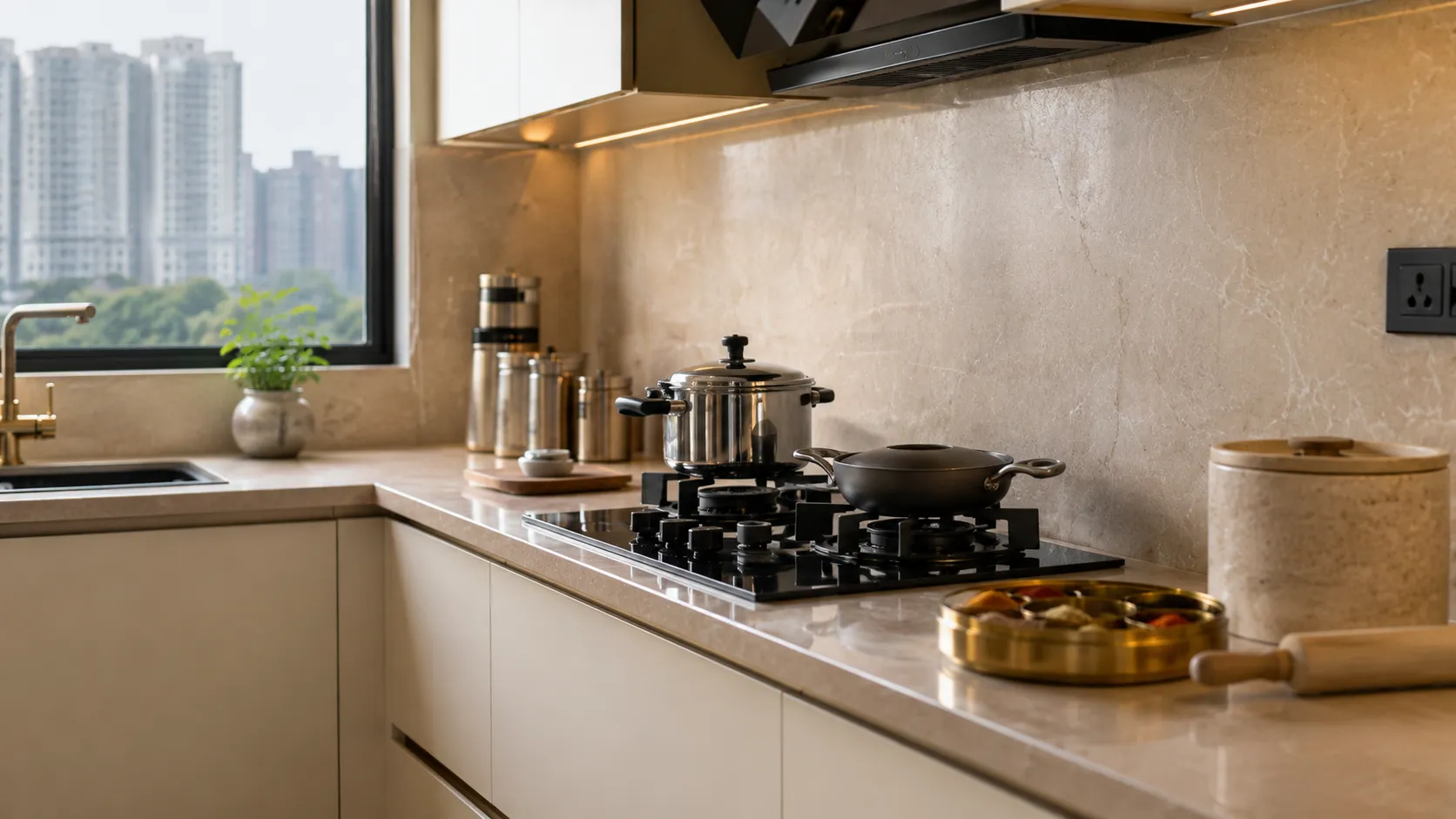
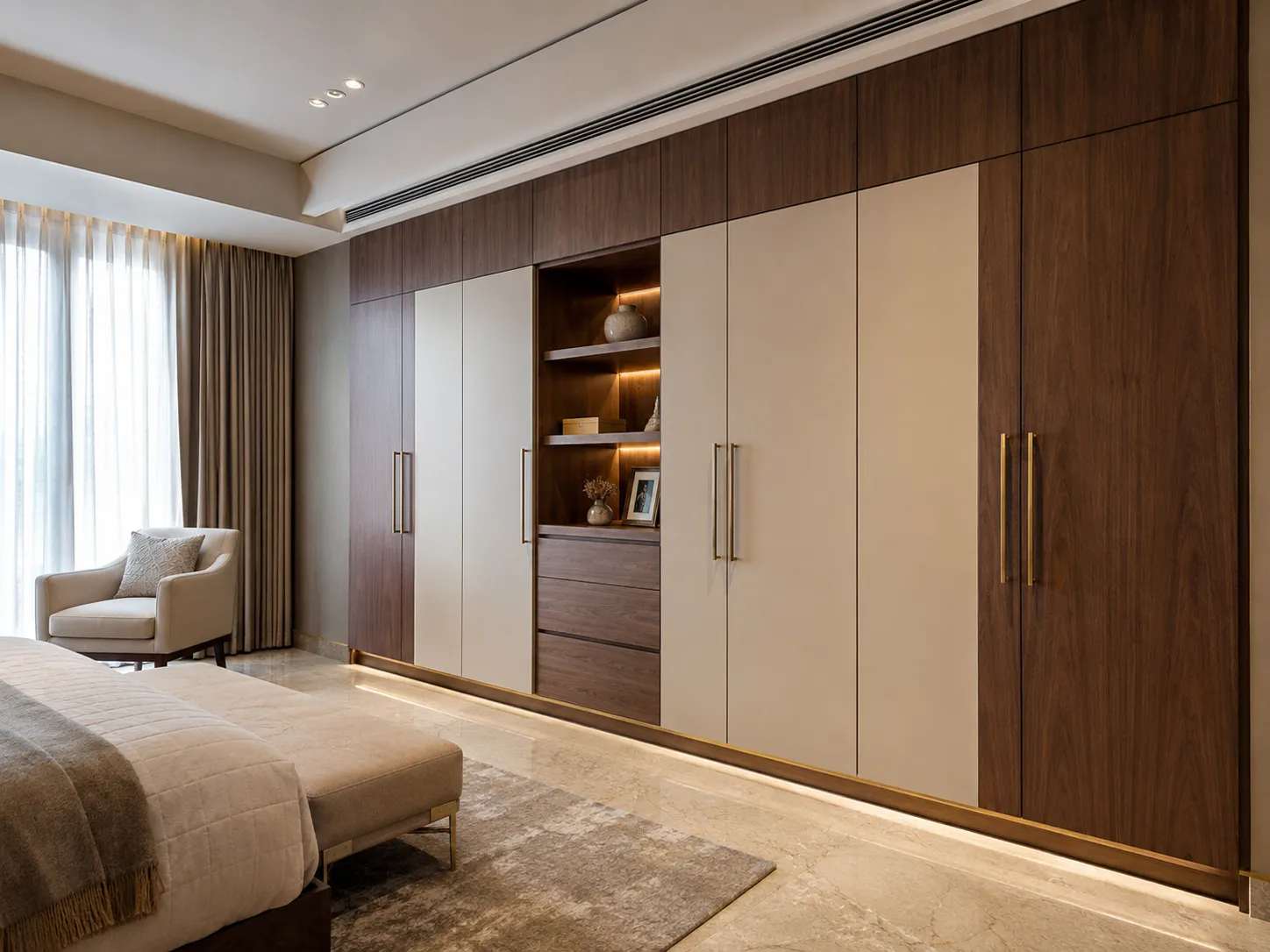
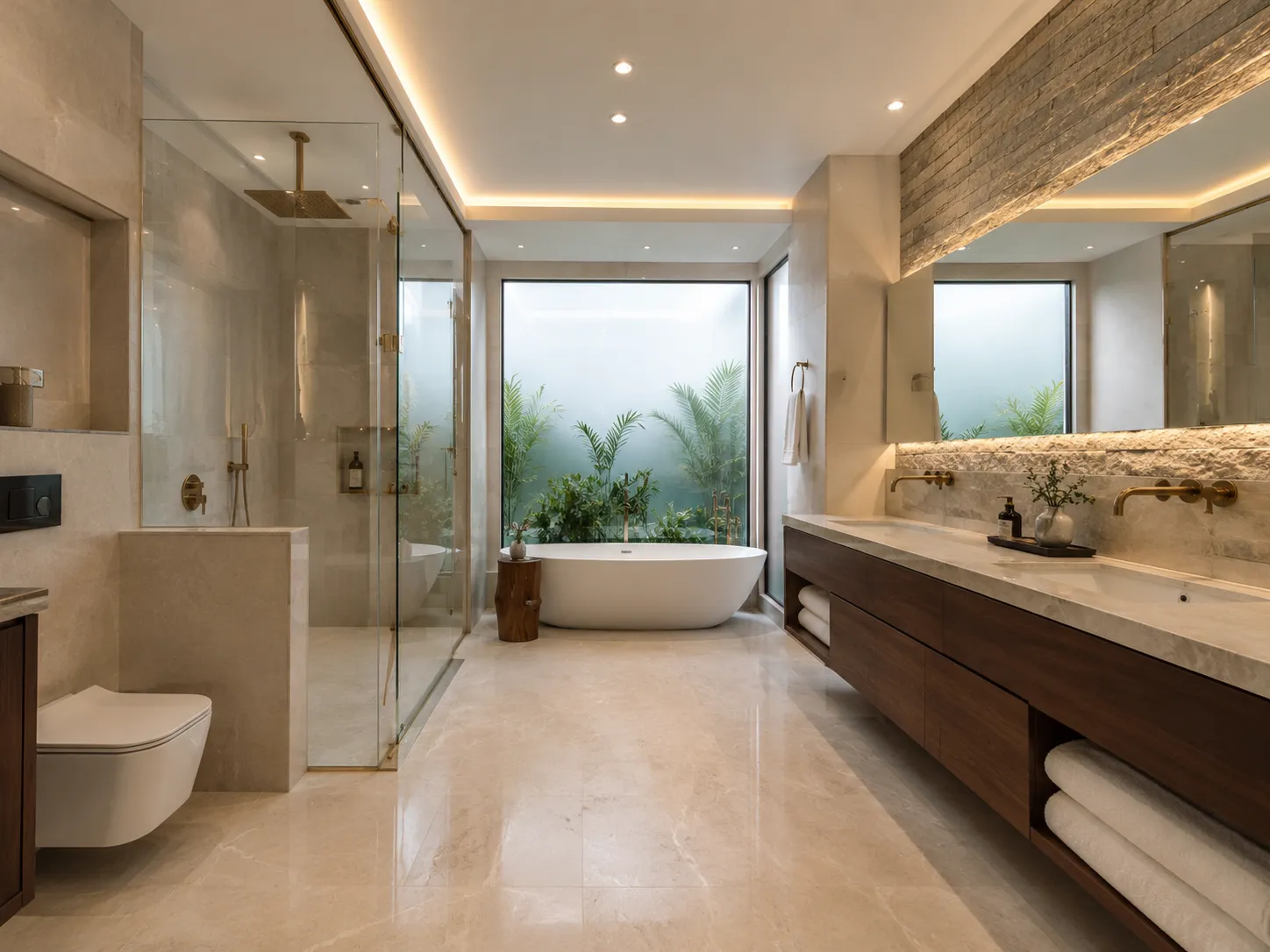
The most interesting work happening in Indian interiors right now isn’t imitating any single period. It is combining a contemporary plan — open, light, practical for how families actually live — with crafts that have been continuous here for centuries: hand-hammered brass, jaali as a light filter, solid-wood joinery, honed local stone.
That combination is what we build, and it’s the argument behind Indian craft in luxury interior design. If you’re planning a home and want to talk through how these ideas translate into a real, buildable scheme, our interior design service is the place to start — or simply get in touch.
Frequently asked
Common questions
What is the history of interior design in short? +
Interior design began as a display of power and belief — Egyptian, Greek and Roman interiors used costly materials and symbolic ornament to signal status. The Renaissance made proportion and perspective central. The Industrial Revolution made furnishings affordable to the middle class, which triggered a backlash in the Arts and Crafts movement. The twentieth century split into Art Deco's glamour and Modernism's stripped functionalism, and the twenty-first century has moved from open-plan minimalism towards warmer, more personal interiors. In parallel, India developed its own continuous tradition from the Indus Valley through Mughal and colonial architecture to today's contemporary Indian luxury.
Who is considered the first interior designer? +
Elsie de Wolfe is widely credited as the first professional interior decorator. Her 1905 commission for the Colony Club in New York, and her 1913 book The House in Good Taste, established interior decoration as a paid profession distinct from architecture and upholstery. Before her, interiors were handled by architects, cabinetmakers or the household itself.
What are the main periods in the interior design timeline? +
The commonly used periods are Ancient (c. 3000 BCE–500 CE), Medieval (500–1400), Renaissance (1400–1600), Baroque and Rococo (1600–1750), Neoclassical (1750–1850), Victorian (1837–1901), Arts and Crafts (1880–1920), Art Nouveau and Art Deco (1890–1940), Modernism and Bauhaus (1919–1960), Mid-century Modern (1945–1970), Postmodernism (1970–1990), and Contemporary (1990–present).
How did Indian interior design evolve? +
India's line runs from the planned brick housing of the Indus Valley, through the courtyard-centred haveli with its jaali screens and climate-driven planning, into Mughal architecture's inlaid marble and symmetrical geometry, then colonial hybrids that combined European furniture with Indian craft. After 1947 modernist civic architecture reshaped urban housing, and today's Indian luxury interiors increasingly pair contemporary layouts with traditional crafts such as hand-hammered brass, jaali work and solid-wood joinery.
What is the current interior design style in 2026? +
The dominant direction is quiet luxury — restrained palettes, natural materials, tactile surfaces and fewer but better pieces. It is a reaction against both the glossy maximalism of the 2010s and the sterile all-white minimalism that followed it. In Indian homes this is showing up as warm woods, honed stone, brass detailing and heirloom pieces used deliberately against calm backdrops.