
Best Flooring for Indian Homes: A Delhi NCR Room-by-Room Guide
Discover the best flooring for Indian homes with our room-by-room guide tailored for Delhi NCR's extreme climate, heavy footfall, and easy maintenance.
17 August 2026
Finding the best flooring for Indian homes requires a strategic approach, particularly in Delhi NCR where extreme summers, chilly winters, and everyday urban dust dictate design choices. At Eagle Decor, a luxury interior design studio based in Gurugram, Delhi, and Noida, we know that a single flooring material rarely serves an entire house perfectly. Instead of applying a uniform surface throughout, the most functional and visually appealing homes utilize a room-by-room strategy.
By matching the flooring material to the specific climate demands, foot traffic, and maintenance requirements of each zone, you ensure longevity and comfort. Let us walk through a tailored approach to flooring selection, using a recent high-rise project as our guide.
Living and Dining Rooms: Expansive, Cooling Matte Tiles
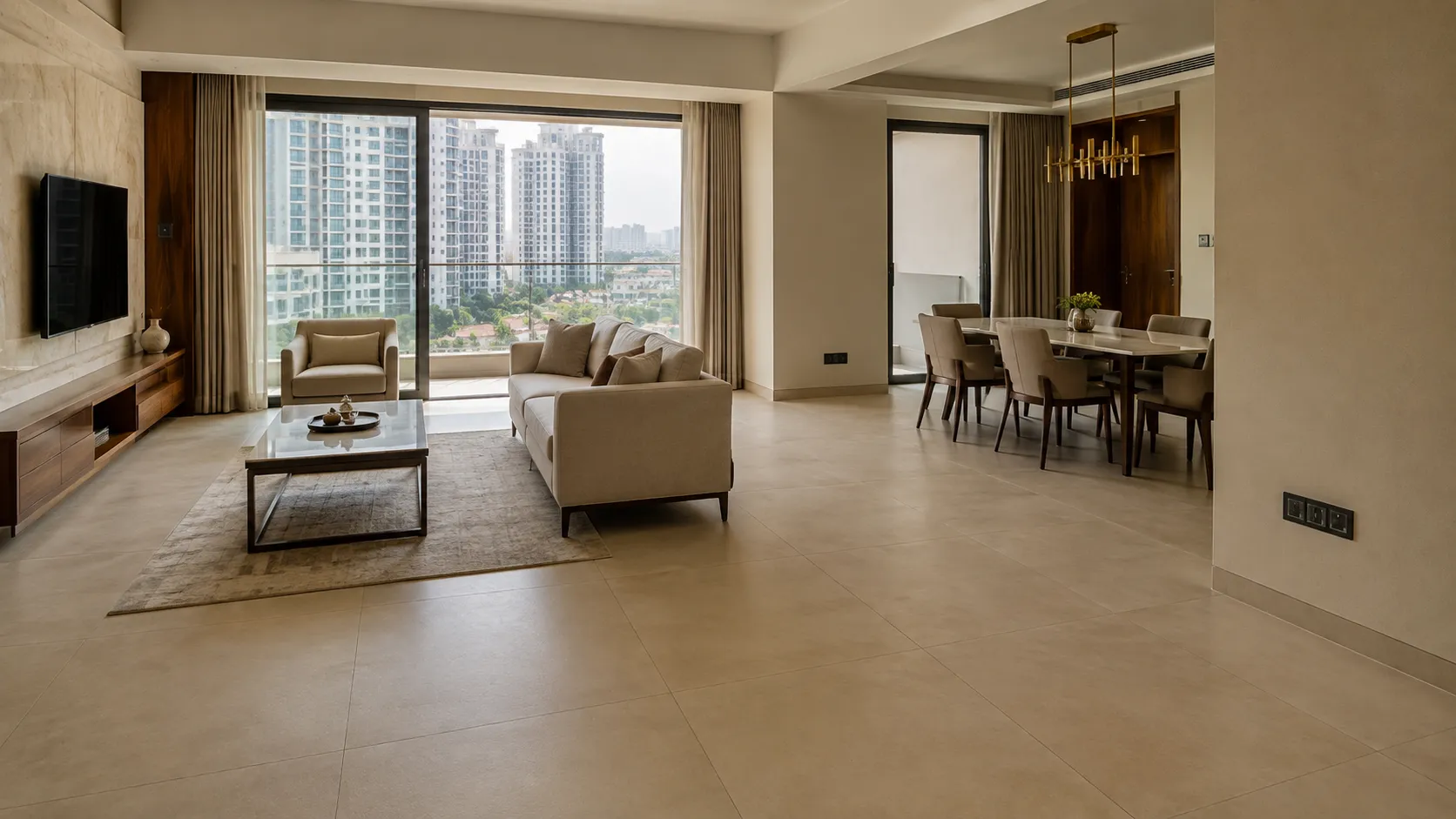
The living and dining areas are the highest-traffic zones in any home. They host guests, endure moving chairs, and often feature expansive open layouts. For these spaces in Delhi NCR, large-format matte tiles—such as high-quality vitrified or porcelain—are an exceptional choice.
Climate and Maintenance Benefits
During the intense 45-degree summers of Northern India, matte stone or tile floors remain remarkably cool underfoot, helping to regulate the indoor temperature. Aesthetically, using large-format tiles in a soft beige or sand tone minimizes visible grout lines. This creates a seamless, expansive look that draws the eye out toward the balcony and the city skyline beyond.
From a maintenance perspective, the matte finish is highly forgiving. Unlike high-gloss floors that highlight every speck of dust or footprint, a matte surface subtly conceals daily wear. It requires only simple sweeping and a damp mop to maintain its sophisticated appearance. Furthermore, a neutral beige tile provides an excellent foundational canvas for premium handmade furniture, allowing pieces like a custom wooden TV console or a plush, light-toned sofa to stand out without clashing with the floor.
Bedrooms: Warm Wooden Tones for Climate-Responsive Comfort
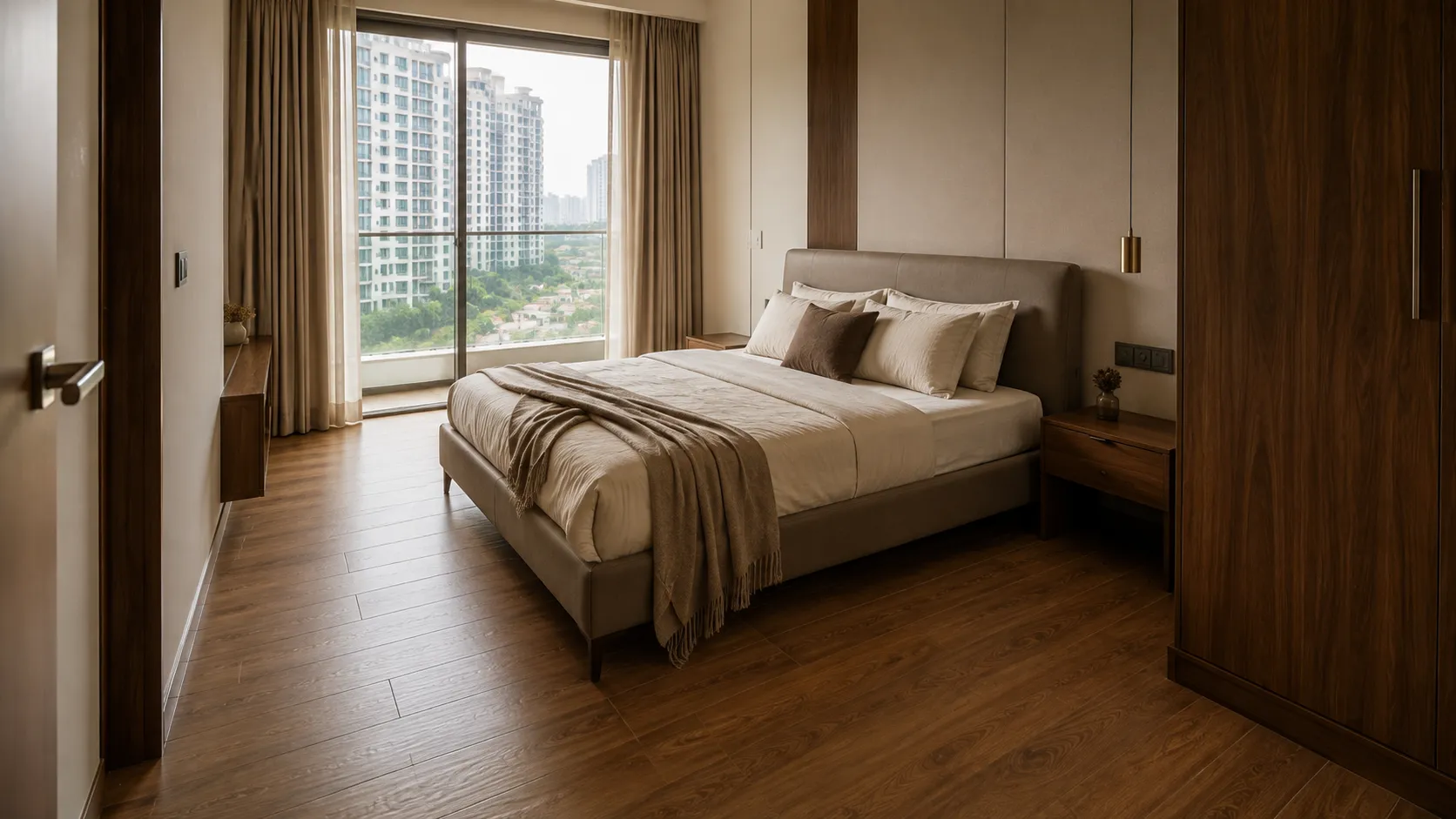
While cool tiles are ideal for the living room, the bedroom requires a completely different sensory experience. Bedrooms are private sanctuaries where comfort, acoustic dampening, and warmth are the primary goals.
Transitioning to Warmth
For bedrooms, high-quality wooden flooring—whether engineered wood or premium laminate planks—is highly recommended. During the brisk Delhi winters, stepping out of bed onto a cold tile floor can be jarring. Wood planks retain ambient room temperature much better than stone or ceramic, providing a cozy, welcoming surface year-round.
Visually, wooden floors introduce an organic, grounding element to the room. When paired with a taupe upholstered bed and rich, dark wood wardrobes, the flooring ties the room’s earthy palette together. The linear pattern of the planks also draws the eye toward the windows, enhancing the sense of space. While wood requires slightly more care to prevent deep scratches from heavy furniture, bedrooms naturally experience lower, softer foot traffic, making it a highly practical and luxurious choice for this specific zone.
Kitchens: Zoned Transitions and Textured Practicality
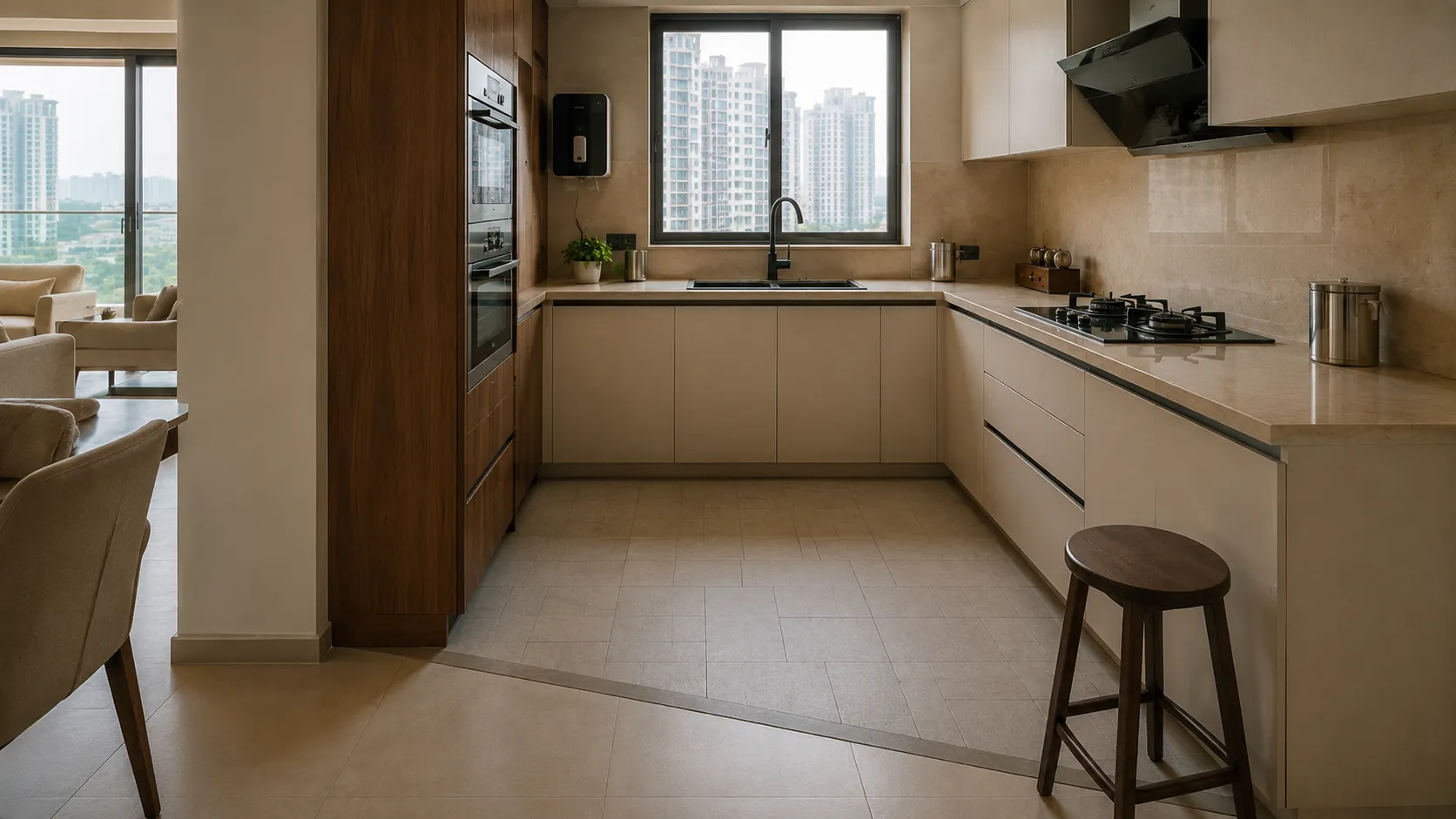
Indian kitchens are high-activity zones prone to heavy footfall, water splashes, and oil spills. The flooring here must prioritize safety, stain resistance, and ease of cleaning above all else.
Defining Spaces with Flooring
In modern open or semi-open layouts, you can cleverly use flooring to define the kitchen zone without building walls. A flush metal transition strip can seamlessly bridge the large-format living room tiles with smaller, more textured tiles in the kitchen.
Opting for a smaller, textured matte tile in a similar beige or grey palette ensures visual continuity with the rest of the home while drastically improving safety. The added texture provides essential grip, reducing the risk of slips when the floor is inevitably wet. Furthermore, smaller tiles often mean more grout lines, which subtly add to the slip resistance. These robust tiles are highly resistant to the turmeric, oil, and harsh cleaning agents often used in busy Indian kitchens, perfectly complementing custom cabinetry like dual-toned beige and wood units.
Bathrooms: Anti-Slip Surfaces for Safety and Style
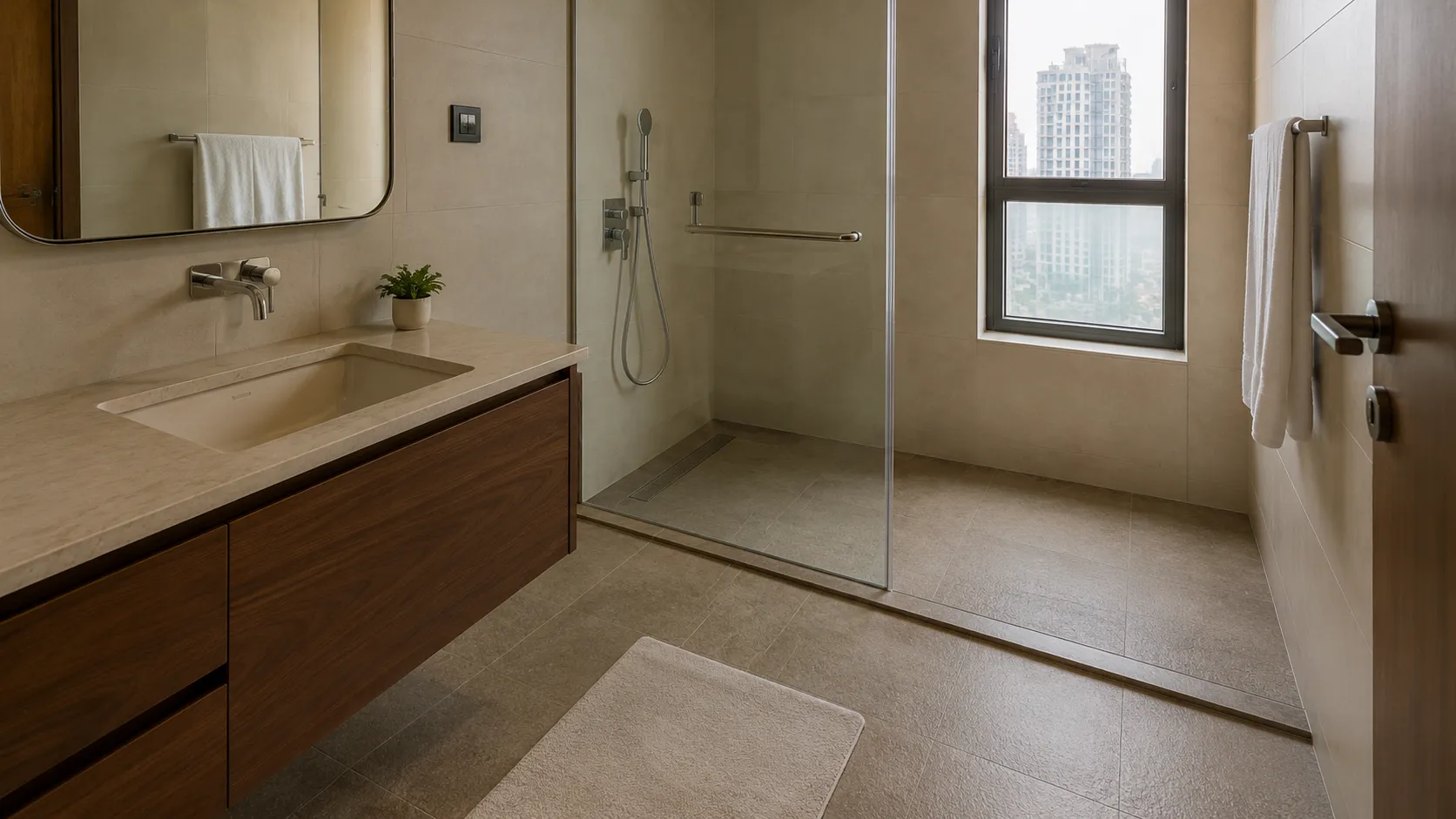
Bathrooms demand the highest level of moisture resistance and safety. The flooring must handle direct water exposure daily without compromising the overall luxury aesthetic of the home.
Prioritizing Grip and Drainage
For bathrooms, textured, anti-slip tiles are non-negotiable. Using a medium-format textured tile in a neutral tone ensures the space feels akin to a modern spa while prioritizing safety.
In well-designed bathrooms, the flooring should flow seamlessly from the dry vanity area straight into the glass-enclosed shower, utilizing a subtle slope for drainage rather than a disruptive step. This continuous flooring approach makes the bathroom feel larger and more cohesive. The matte, textured surface pairs beautifully with floating wooden vanities and beige stone countertops, ensuring the space feels warm and organic rather than cold and sterile.
Crafting a Cohesive Flooring Strategy
Selecting the best flooring for Indian homes is not about finding one perfect material, but rather curating a collection of materials that work in harmony. By transitioning from cooling large-format tiles in the living spaces to warm wooden planks in the bedrooms, and utilizing textured, slip-resistant options in the kitchen and bath, you create a home that is as functional as it is beautiful.
If you are planning a renovation or a new build in Delhi NCR, navigating these material choices can be complex. Eagle Decor offers complete turnkey solutions to handle every detail of your interior architecture. From structural flooring transitions to custom furniture design, our team ensures every inch of your space is designed for your specific lifestyle and climate needs.
Frequently asked
Common questions
Which flooring is best for Delhi's extreme summers and winters? +
Large-format vitrified or porcelain tiles are excellent for living areas as they stay cool during the intense summer heat. For bedrooms, wooden flooring is highly recommended as it provides essential warmth and comfort underfoot during colder winter months.
How do I maintain matte floor tiles in a dusty environment like Gurugram or Noida? +
Matte tiles are surprisingly forgiving with dust compared to high-gloss finishes. Regular sweeping or vacuuming, followed by a damp mop with a mild, pH-neutral cleaner, keeps them looking pristine without leaving visible streaks or water marks.
Can I use different flooring materials in an open-plan layout? +
Yes. Using a subtle flush transition profile, you can seamlessly shift from large living room tiles to smaller, textured kitchen tiles. This defines the different zones visually while ensuring the most practical material is used for each specific activity.