
Best Materials for a Pooja Room in Delhi NCR: Vastu & Durability
Selecting the right materials for a luxury pooja room hinges on durability against Delhi NCR's climate and adherence to Vastu principles, with BWP-grade marine plywood and solid teak being the leading choices.
11 July 2026
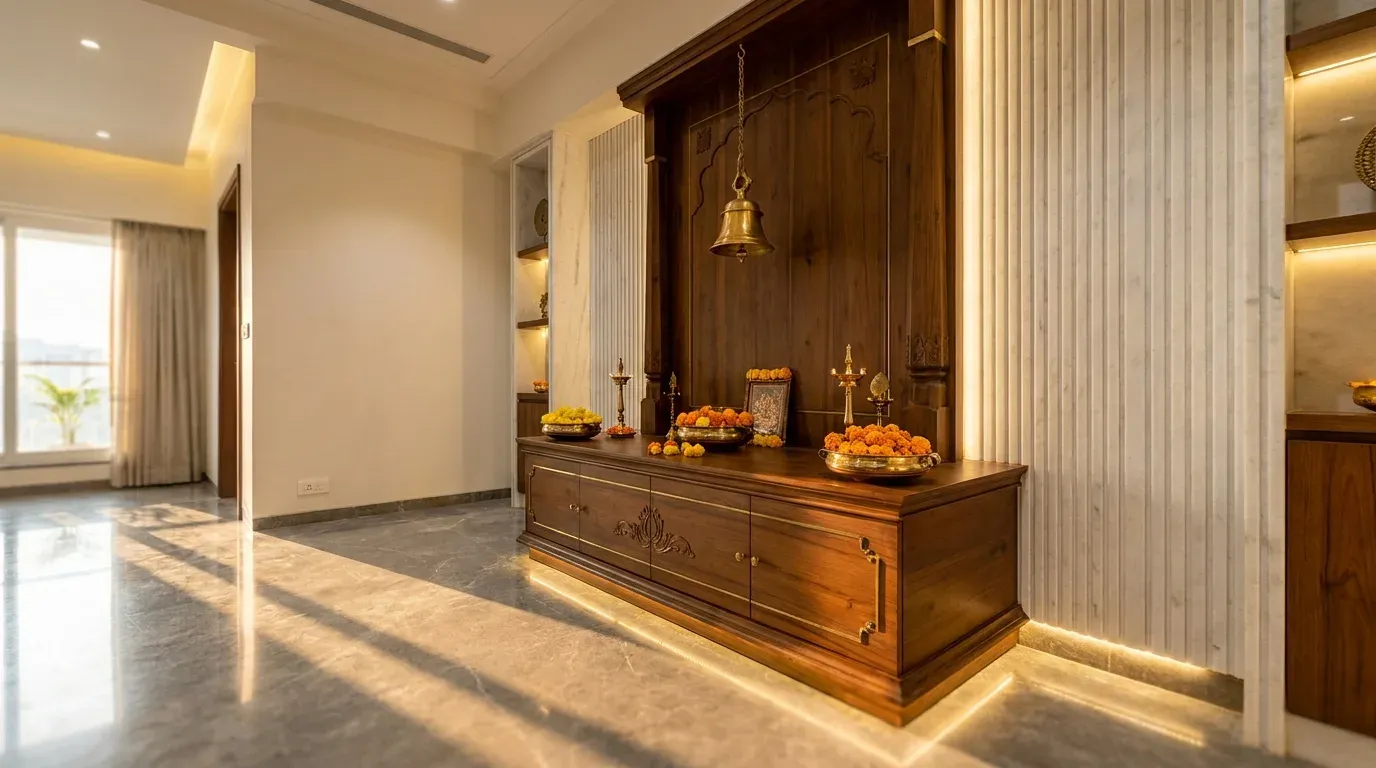
Selecting the best materials for a luxury pooja room in Delhi NCR requires a balance between enduring craftsmanship and spiritual harmony. The region’s distinct seasonal humidity and heat demand materials that won’t warp or degrade, while traditional Vastu principles guide the space’s orientation and elemental balance. This guide focuses on the critical choice between engineered wood and solid timber, evaluating each for longevity, aesthetics, and Vastu compliance.
The Core Challenge: Delhi NCR’s Climate and Vastu
The pooja room is a sanctuary of daily worship, demanding an atmosphere of serene permanence. In Gurugram and Noida, this is challenged by high humidity levels, especially during the monsoon, and significant temperature fluctuations. Materials that absorb moisture can swell, leading to cracked laminates, loose joints, or mould. Simultaneously, Vastu Shastra emphasizes purity, natural elements, and specific directional placements. The ideal material must therefore be physically robust and spiritually congruent, creating a foundation that supports both the ritual and the room’s longevity.
Material Analysis: BWP Marine Plywood vs. Solid Wood
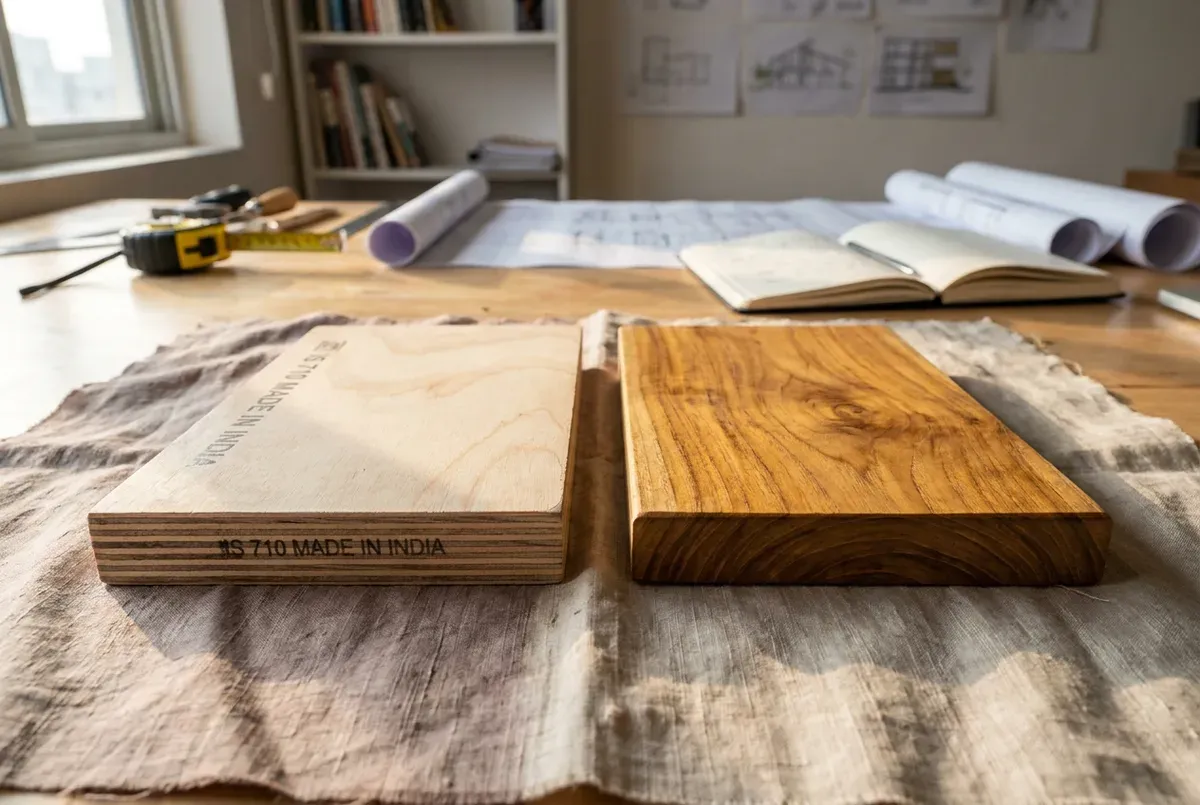
Boiling Water Proof (BWP) Marine Plywood (IS 710 Standard)
BWP-grade marine plywood, manufactured to the stringent IS 710 standard, is engineered specifically to resist moisture. Its layers are bonded with waterproof phenolic resins, making it highly resistant to delamination and fungal decay. For pooja room cabinetry—the altar platform (vedi), storage units for ritual items, and wall panels—it provides a stable, warp-free substrate.
- Durability: Exceptionally resistant to humidity, ideal for the lifetime of the installation.
- Finish: Serves as a base for luxurious laminates, veneers, or hand-painted finishes that can emulate the warmth of wood or incorporate specific Vastu-recommended colours.
- Consideration: While the core is supremely stable, the final aesthetic and feel are imparted by the surface finish.
Solid Wood: Teak and Sheesham
Solid wood, particularly seasoned teak or sheesham, brings an inherent, warm authenticity to a sacred space. Teak’s natural oils make it highly resistant to moisture and insects, while sheesham offers a rich grain and traditional appeal.
- Aesthetics & Vastu: Wood is considered a sacred, natural element in Vastu, promoting positive energy. The tactile, organic quality of solid wood furniture is unparalleled.
- Durability: High-quality, properly seasoned teak is extremely durable in our climate. Sheesham requires a very robust protective finish to perform similarly.
- Consideration: Premium solid wood is a significant investment and requires expert craftsmanship to account for natural wood movement.
Making the Informed Choice for Your Space
The decision between these two excellent options often comes down to design intent, budget, and specific room conditions.
Choose BWP Marine Plywood when:
- The design involves complex, modern modular cabinetry with integrated lighting.
- A specific, consistent colour or veneer finish (like a light oak or white gloss) is desired across large panels.
- The budget requires optimizing cost without compromising on core durability against moisture.
Choose Solid Teak or Sheesham when:
- The aesthetic goal is a classic, handcrafted altar or furniture with carved details.
- The inherent beauty and grain of natural wood are central to the room’s spiritual ambiance.
- You are investing in heirloom-quality, solid wood furniture for the home.
A sophisticated approach often combines both: using BWP plywood for the primary, moisture-resistant structure of built-in units and incorporating solid wood accents for doors, framed panels, or the central altar piece. This hybrid method leverages the strengths of each material. For a harmonious integration of such material choices within a broader design vision, professional Interior Design Services in Delhi NCR are invaluable.
Vastu-Compliant Material Application
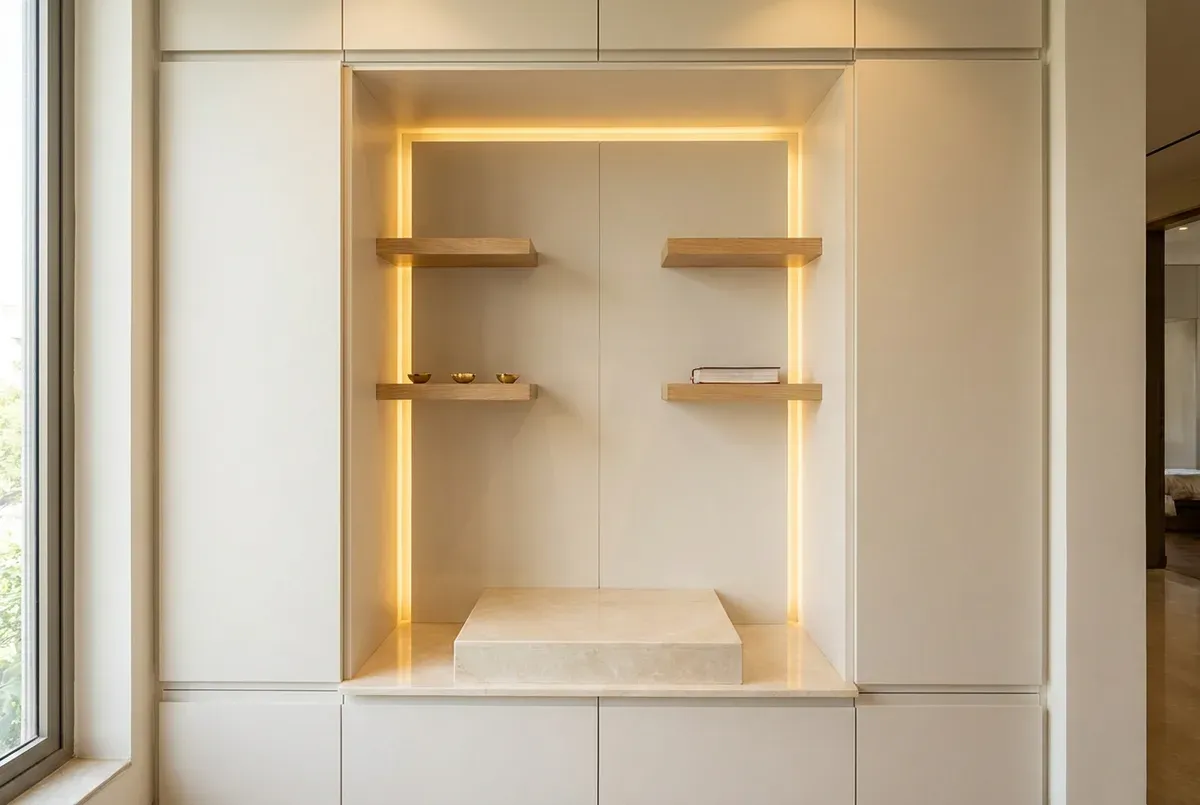
Beyond selection, how materials are applied is crucial for Vastu.
- Directions: The pooja room is ideally in the north-east, east, or north. Materials should feel light and pure—well-finished wood, marble, or white tones align well here.
- The Altar: The platform (vedi) should be sturdy and square/rectangular. A BWP core with a marble or solid wood top is a common and stable solution.
- Storage: Cabinets for storing items like diyas, incense, and books should be clean-lined and clutter-free. Modular Furniture Solutions made with BWP plywood offer excellent customization for these needs.
- Flooring: Stone or marble is preferred for cleanliness and coolness. Wooden flooring can be used if well-sealed.
Sustainability and Long-Term Value
Today’s luxury interior choices are increasingly mindful of provenance and environmental impact. Reputable suppliers provide FSC-certified woods and low-VOC finishes, ensuring the sanctity of the space extends to ecological responsibility. Durable materials chosen for their longevity, like premium teak or high-grade marine plywood, inherently represent sustainable value by eliminating the need for premature replacement. This philosophy of thoughtful, lasting material selection is central to creating a true sanctuary. It aligns with a broader approach to comprehensive construction services that consider a home’s integrity holistically.
Final Considerations for a Lasting Sanctuary
Creating a pooja room that stands the test of time and nurtures daily practice involves layered decisions. The material forms the foundational layer. Prioritize technical specifications—the IS 710 mark for plywood, the seasoning and grade for solid wood—from trusted suppliers. Engage skilled craftsmen who understand joinery techniques for the chosen material. Finally, let the space reflect simplicity and serenity; the best materials serve the ritual, not distract from it. At Eagle Decor, we approach these spaces with a deep respect for tradition, material science, and personalized craftsmanship, ensuring your sanctuary is both spiritually resonant and enduringly beautiful.
Frequently asked
Common questions
Is marine plywood good for a pooja room according to Vastu? +
Yes, if it is of high-quality BWP grade and finished appropriately. Vastu emphasizes purity, stability, and natural elements. BWP plywood provides a stable, warp-free base that can be finished with natural wood veneers, pious colours, or marble laminates to create a Vastu-compliant environment. The key is the quality of the material and the sanctity of the final finish.
Which is better for Delhi NCR humidity: teak or sheesham? +
Teak is naturally superior for humid conditions due to its inherent oils, which repel moisture and insects. Sheesham, while a beautiful and traditional hardwood, is more porous and requires an exceptionally robust and well-maintained protective finish to achieve similar durability in the fluctuating climate of Delhi NCR.
What is the best direction for a pooja room in a home? +
The north-east (Ishanya) corner is considered the most auspicious direction for a pooja room, as it is associated with positive spiritual energy. The east (direction of the sun) and the north (direction of prosperity) are also highly favourable. The room should be placed on the ground floor whenever possible.
Can I use a combination of materials in my pooja room design? +
Absolutely. A hybrid approach is common and effective. For example, using moisture-resistant BWP marine plywood for the main structure of built-in cabinets and wall panels ensures longevity, while incorporating solid teak for the focal point altar (vedi), framed deity doors, or decorative carving adds natural warmth and traditional craftsmanship.